

Uzbekistan proposes subsidizing car loans for electric vehicles
Uzbekistan has developed a draft resolution to subsidize auto loans for new electric vehicles with interest rate compensation of up to 8 percentage points.
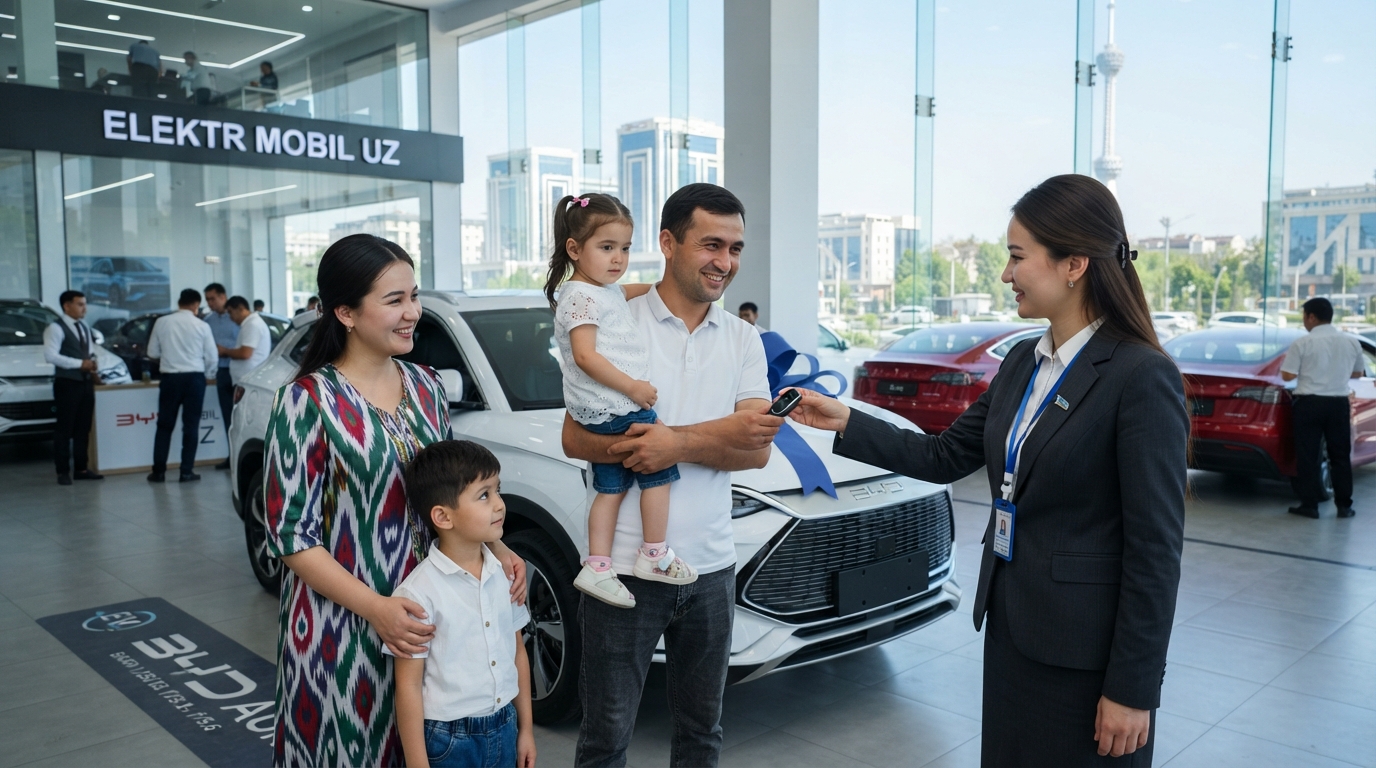
Uzbekistan has proposed subsidizing car loans for the purchase of electric vehicles.
Tashkent, Uzbekistan (UzDaily.uz) —
Uzbekistan has developed a state support mechanism for buyers of new electric vehicles, which provides for subsidized car loans. A corresponding draft resolution of the Cabinet of Ministers has been submitted for public discussion.
According to the document, starting August 1, 2026, state support will be provided for the purchase of a new electric vehicle priced no more than 1,000 basic calculation units. The maximum car loan amount eligible for compensation will be 300 million soums.
The state intends to compensate a portion of the interest rate during the first two years of the loan. This support will apply to the portion of the rate exceeding 16% per annum, with the compensation amount not exceeding 8 percentage points.
Therefore, for a loan at 24% per annum, the state will compensate 8 percentage points, and for a loan at 20%, 4 percentage points. The program will apply exclusively to new M1 category electric vehicles that run solely on electricity and are not equipped with an internal combustion engine.
To receive compensation, borrowers must meet the bank's requirements, have no overdue loans, and declare their intention to use state support when applying for the loan.
Compensation funds will be transferred directly to the bank to partially cover the loan interest, not to the borrower.
Compensation payments may be terminated if the borrower fails to make loan payments for three consecutive months, repays the loan early, terminates the loan agreement, or provides false information when applying for state support.
It is proposed that the program will be financed from additional funds in the republican budget in 2026.
From 2027 to 2030, the necessary expenses are planned to be allocated annually in the state budget, taking into account the demand for this support measure. The draft resolution is currently undergoing public discussion, so its provisions may be adjusted before final adoption.