

Uzbekistan Proposes Excise Tax on Palm Oil Imports
Uzbekistan has proposed introducing a specific excise tax on palm oil imports to generate an estimated 21.7 billion soums in revenue and encourage healthier consumption.
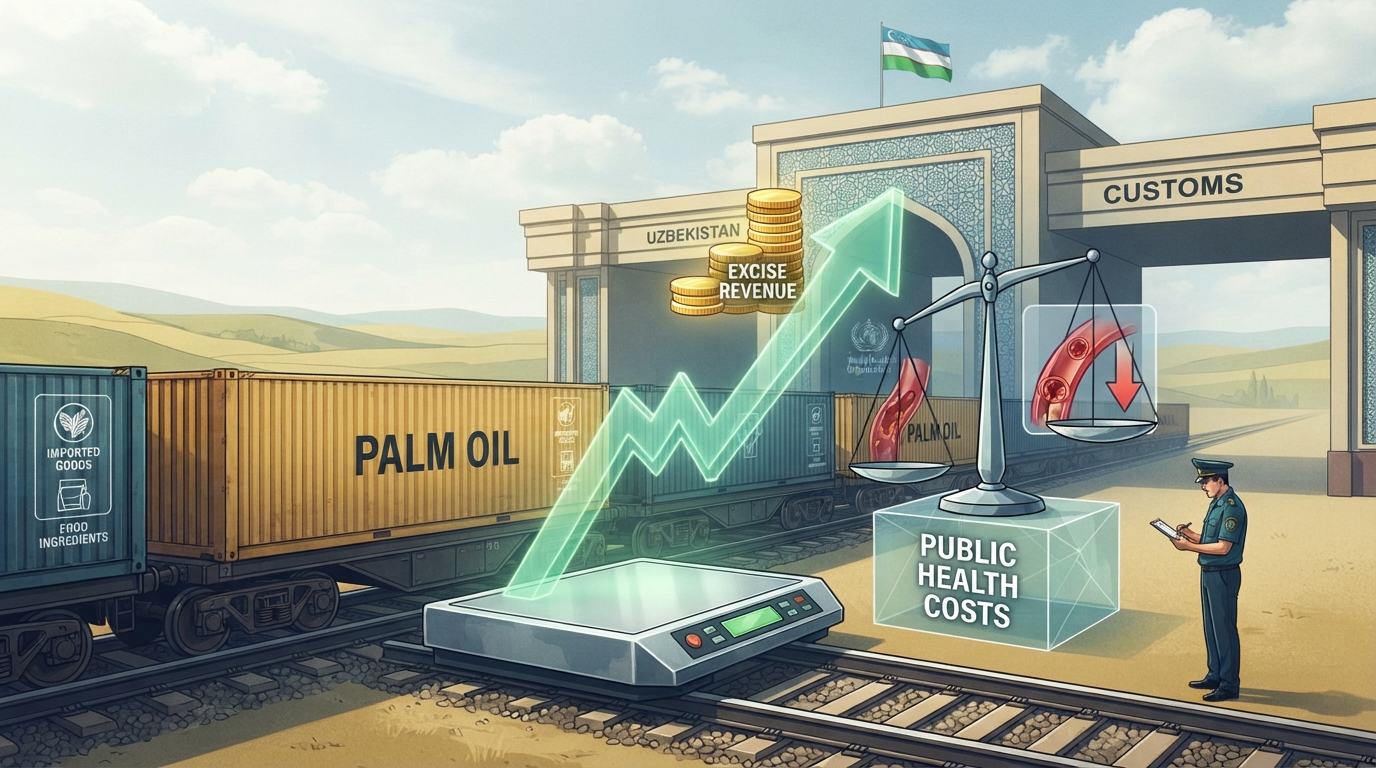
Uzbekistan is considering implementing an excise tax on imported palm oil, a suggestion put forth by the Institute for Reducing the Share of the Shadow Economy, Improving Tax and Customs Administration and Fiscal Analysis, which operates under the Ministry of Economy and Finance. This proposal was introduced during a fiscal dialogue held on July 30.
The institute recommends a specific excise tax of $139 per ton, equivalent to approximately 1.7 million soums. Based on the calculations provided by the initiative's creators, this amount would represent about 10% of the projected average import cost of palm oil in 2026, estimated at $1,388, or 16.93 million soums per ton.
With an estimated annual import volume of 12.8 thousand tons, the proposed excise tax is projected to generate an additional 21.7 billion soums for the state budget.
The rationale behind this initiative, as explained by its developers, is that the current market price of palm oil does not adequately account for the societal costs linked to its consumption, particularly healthcare expenses. The presentation highlights that such taxes are recognized in economic theory as a mechanism to address negative externalities.
Furthermore, the initiative's authors contend that consumers are not always fully informed about the potential health risks associated with consuming products high in saturated fats. Given palm oil's frequent use in processed foods, the institute believes that product labeling alone is insufficient, and that price adjustments could serve as an additional method to manage consumption.
The presentation references the World Health Organization's 2016 report, "Fiscal policies for diet and the prevention of noncommunicable diseases," which suggests that taxing products high in saturated fats can be a strategy for preventing noncommunicable diseases.
The authors also cite the World Bank's perspective, which indicates that such excise duties can simultaneously influence consumption patterns and generate additional government revenue.
The institute also points out that existing tax incentives and zero rates, in their assessment, give certain types of fats a price advantage over alternative products. The developers believe that introducing an excise tax would help to partially correct this imbalance.
The proposal was presented for discussion during the fiscal dialogue, and the event materials did not indicate any decision regarding its adoption.