

US urges its citizens in Middle East to be ready to leave in case of escalation in region
US President Donald Trump warned on Friday that "we'll be hitting them [Iranians] very hard".
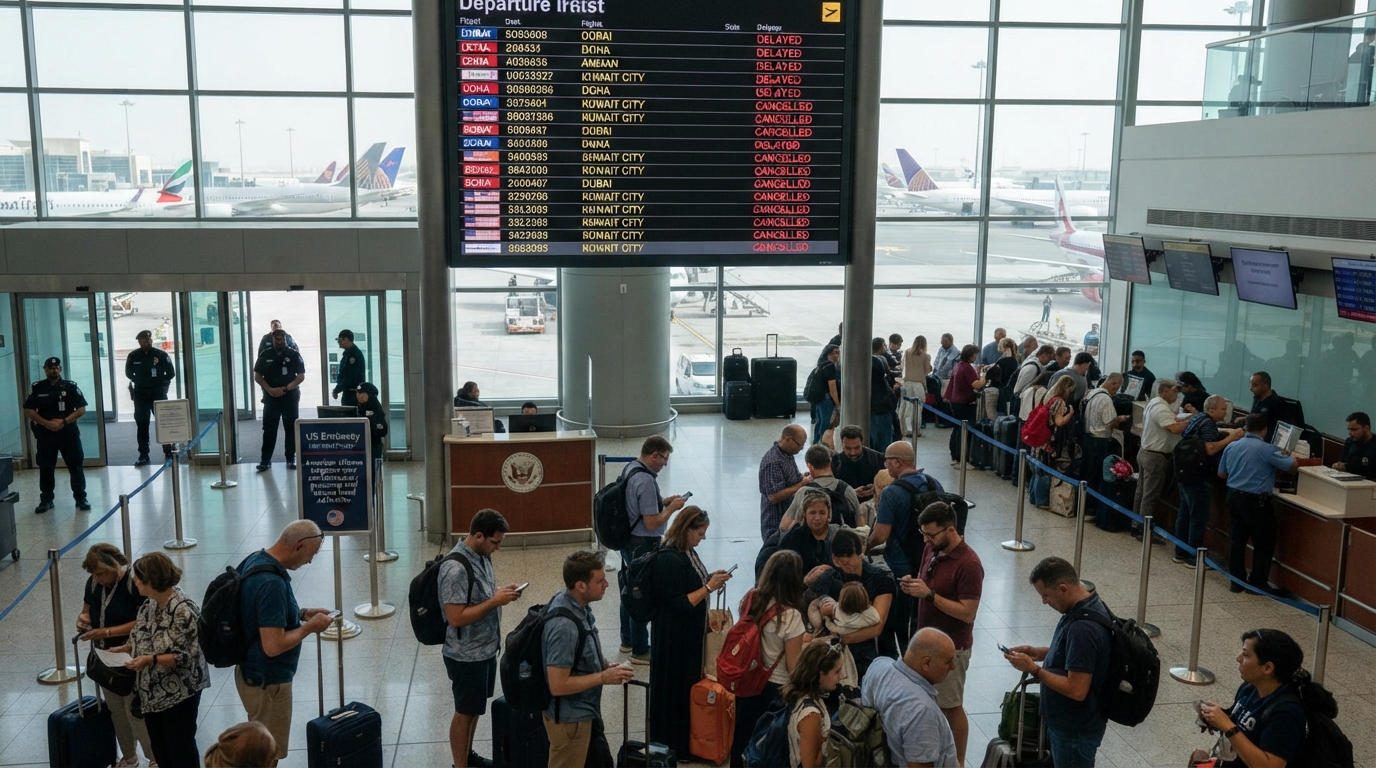
The United States has advised its citizens residing in the Middle East to maintain vigilance and be prepared for potential departure in the event of an escalation in the region. This alert comes amidst reports in US media suggesting that President Donald Trump might be contemplating new military actions against Iran over the upcoming weekend.
US embassies throughout the Middle East, including those in Bahrain, Iraq, Israel, Jordan, Kuwait, Lebanon, Oman, Qatar, Saudi Arabia, and the United Arab Emirates, reissued the security advisory for American nationals, cautioning about the possibility of "unexpected escalation."
The State Department's alert stated, "US diplomatic facilities, including outside the Middle East, have been targeted. Iran and groups supportive of Iran may target other US interests overseas or at locations associated with the United States and Americans throughout the world." It further advised, "Americans currently in the Middle East should exercise caution and heightened vigilance and should be prepared for flight cancellations, periodic airspace closures, and potential travel disruptions." The advisory, issued on Saturday, also recommended that "Americans in the region should consider departing, or be prepared to depart should there be escalation. Americans outside the Middle East should seriously reconsider travel to and through the region."
Earlier, US media quoted US officials indicating that Trump could order fresh strikes against Iran as early as this weekend. CBS News, the BBC's media partner in America, reported that multiple sources revealed plans by the US and Israel for what would be one of the most severe bombing campaigns to date against energy infrastructure targets in Iran. According to sources briefed later, this plan was discussed during Trump's cabinet meeting on Friday. One source mentioned that some White House aides focused on politics were strongly opposed to the idea. During the cabinet meeting, Trump was overheard by reporters saying, "We'll be hitting them [Iranians] very hard. At some point, they're going to say, 'We just can't take it anymore.'"
On Thursday, the US military announced the completion of a "heavy wave" of strikes against Iran in retaliation for Tuesday's attempted ballistic missile attacks on American forces. The US Central Command (Centcom) stated it struck "dozens" of Iran's Islamic Revolutionary Guard Corps (IRGC) targets in response to Tehran's firing on US bases in Jordan and at ships in the Strait of Hormuz. Iranian state media reported that three people, including a two-year-old child, were killed in the US strikes.
The conflict intensified this week after a period of relative calm, marked by the first publicly announced joint US-Saudi strikes targeting Iranian proxies in Iraq. Washington and Tehran have been engaged in escalating strikes and counter-strikes since a ceasefire in April, intended to pause the months-long war, collapsed in June. The US has blockaded Iranian ports and bombed Iranian sites, while Iran has launched missiles and drones at US assets in various Middle Eastern countries and targeted shipping in the Strait of Hormuz, a crucial global oil shipping route. The US and Israel initiated their strikes against Iran on February 28.