

US revokes Brazilian ambassador's visa, official says, as diplomatic tensions escalate
It comes after the Brazilian government refused to grant visas for two US state department officials.
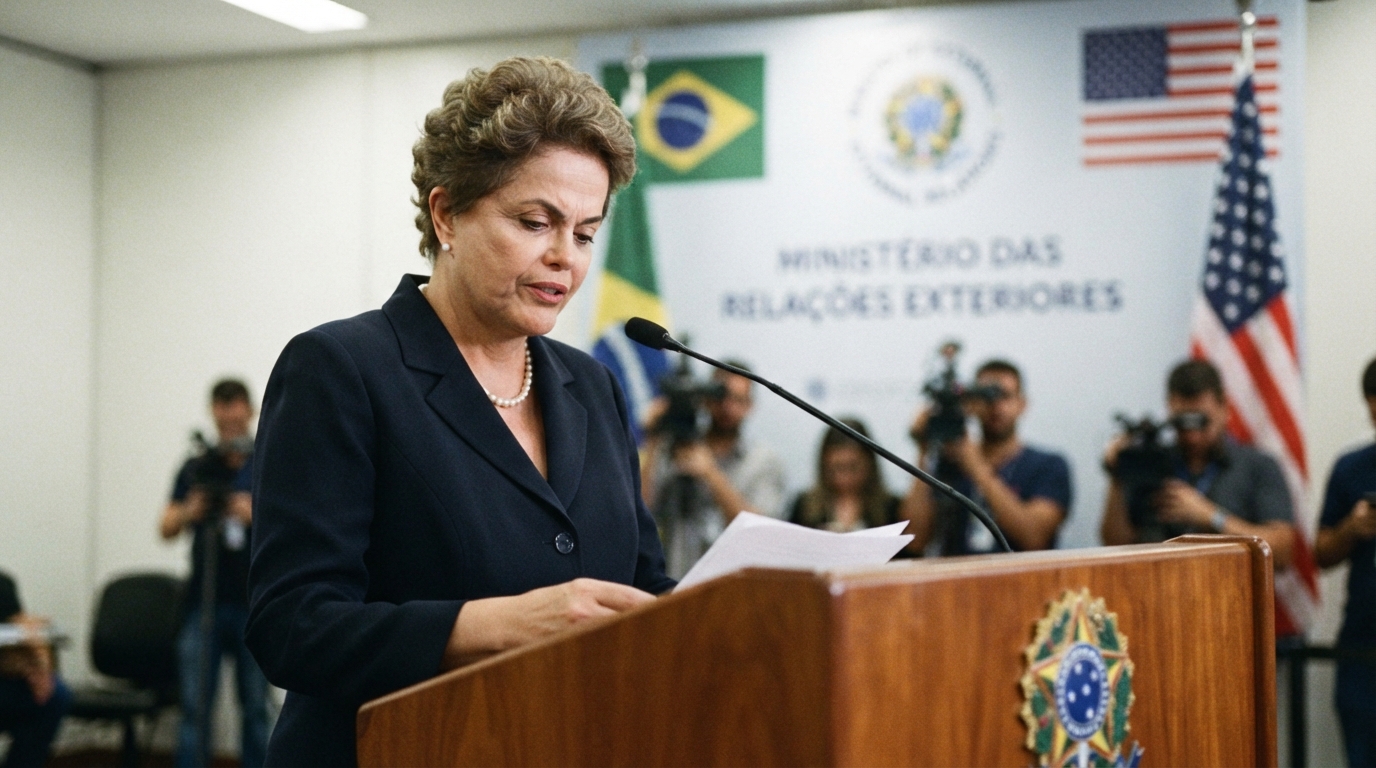
The United States has revoked the visa of Maria Luiza Ribeiro Viotti, Brazil's current ambassador to the US, a State Department official confirmed. This action marks a further escalation of diplomatic tensions between the two nations, occurring in the lead-up to Brazil's elections.
This development follows Brazil's refusal to grant visas to two US State Department officials who had intended to visit Brazil in late July. Brazilian President Luiz Inácio Lula da Silva accused these officials of seeking to "meddle" in Brazil's elections, a claim the US has dismissed as "baseless."
The US official clarified that the visa revocation does not constitute an expulsion of Brazil's ambassador from the United States.
The BBC has sought comments from the Brazilian government, the Brazilian embassy, and the State Department regarding this matter.
This incident is the latest in a series of disputes between the US and Brazilian governments, which have intensified in recent months. Previous points of contention include the US reimposing tariffs on Brazil and designating Brazilian gangs as terrorist organizations.
The two State Department officials were scheduled to visit Brazil in late July for what they described as discussions concerning freedom of expression and religion, and election integrity. They also planned to meet with right-wing candidate Flávio Bolsonaro, the son of former right-wing president Jair Bolsonaro. The elder Bolsonaro is currently serving a 27-year prison sentence for plotting a coup after his defeat in the last election.
A few weeks prior, Flávio Bolsonaro, who has received endorsements from Argentine President Javier Milei and Israeli Prime Minister Benjamin Netanyahu, informed a group of diplomats that Brazil's voting machines shared an origin with Venezuela's, citing a CIA report on electoral fraud in that country. Flávio Bolsonaro later denied questioning the electoral system's integrity, stating his desire for maximum international observers.
However, following this meeting, the Brazilian government blocked visas for a US delegation, citing concerns that they would attempt to cast unfounded doubts on the election. This delegation included two senior State Department officials, identified as Riley M Barnes, an assistant secretary of state for democracy, human rights, and labor, and Samuel Samson, a deputy assistant secretary in the same section.
Flávio Bolsonaro's assertions regarding the country's electronic voting machines have been refuted by Brazil's Superior Electoral Court. Brazil operates its own system, which experts have lauded as one of the most secure globally.
In a related diplomatic move, the Brazilian government has also withheld approval for Donald Trump's nominee for the next US ambassador to Brazil. Trump nominated Daniel Perez, a Florida state representative and close ally of US Secretary of State Marco Rubio, on June 1 without first seeking Brazil's approval, a standard diplomatic practice. Brasília reportedly felt disrespected by this omission.
President Lula has publicly criticized the State Department under Rubio and its increasing involvement in Latin American politics, including its endorsement of conservative candidates in some elections. Brazil's president has confirmed that two US government officials were denied visas due to fears of election interference.