

US admits 'unfortunate error' after mislabelling countries on map of Africa
A State Department presentation at HIV conference put Ivory Coast in East Africa and made Nigeria landlocked.
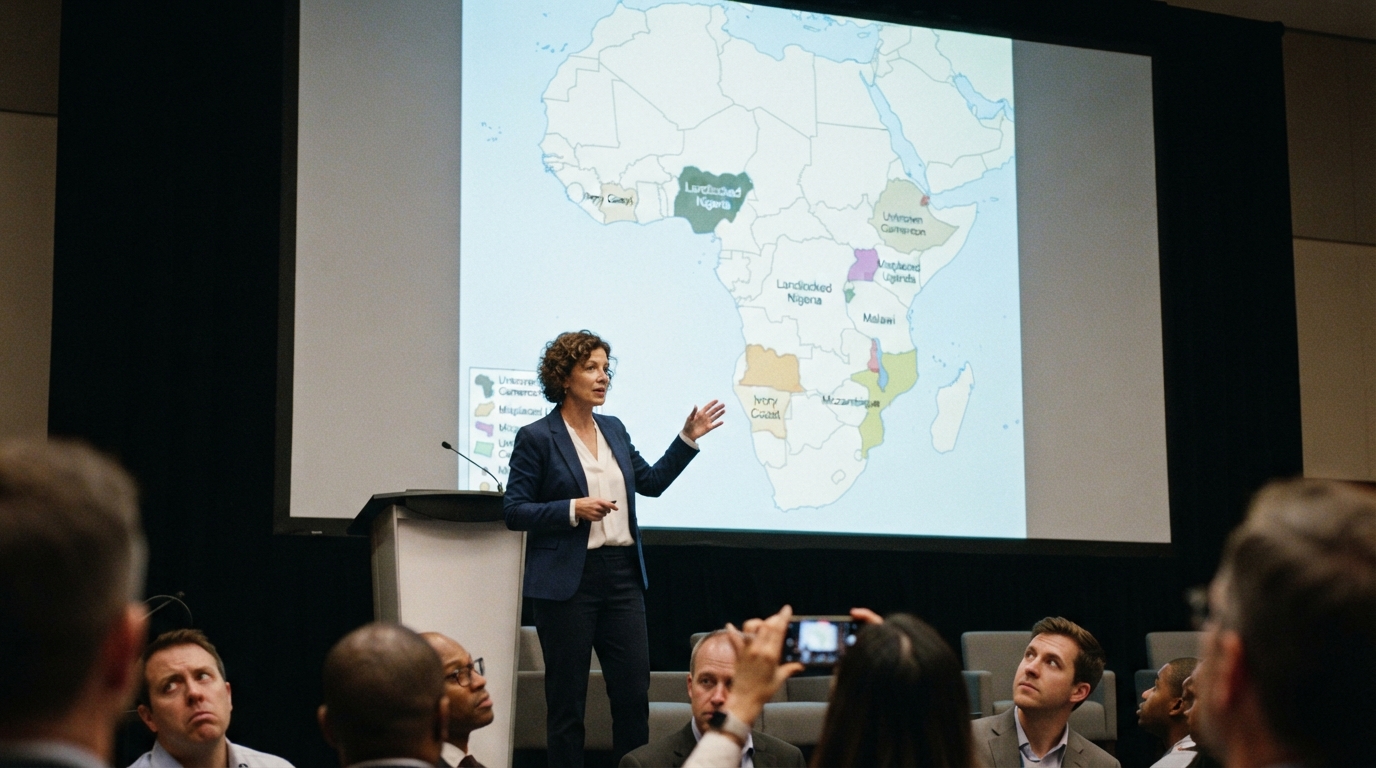
The United States has acknowledged an "unfortunate error" after a map used in a presentation at an HIV/Aids conference in Rio de Janeiro incorrectly labeled several African countries.
Nigerians might have been surprised to find their country depicted as landlocked, while residents of Ivory Coast could have been shocked to see themselves located in Southern Africa instead of West Africa, according to the map displayed by a US official. The cartographic blunder also featured six misidentified countries with completely unrecognizable shapes.
The flawed map appeared during a US State Department slide presentation on Sunday at an Aids conference in Brazil, which focused on Washington's funding for HIV programs. The State Department attributed the mistake to "an unfortunate error" that occurred when a team member "hurriedly altered" the slide deck before the event.
In a statement quoted by news agencies, a spokesperson took "full responsibility for the confusion and misrepresentation it caused for attendees, including our African partners."
The error came to light after HIV/Aids expert Emily Bass shared a photograph of the slide on her Substack newsletter, leading to widespread online criticism. An analysis by Reuters news agency indicated that the image contained an artificial intelligence watermark, suggesting it was created using AI tools.
Four of the six highlighted African countries—Nigeria, Mozambique, Ivory Coast, and Malawi—were incorrectly positioned. Uganda was roughly in the correct location but was misshapen, and while Cameroon was mentioned in the key, its name was not linked to a country on the map. OpenAI stated it was investigating the report, Reuters added.
The presentation was delivered by a senior US official overseeing the President's Emergency Plan for Aids Relief (Pepfar), Washington's primary global HIV program.
Senator Jeanne Shaheen, a Democrat and ranking member of the US Senate Foreign Relations Committee, criticized the incident on X, stating, "What an embarrassment. This is what happens when [the State Department] fires career experts and tries to have AI conduct diplomacy." Cameron Hudson, a former State Department official, called the mistake "stupid and embarrassing," attributing it to "too junior staff performing work under-supervised."
The 26th International Aids Conference commenced on Sunday in Rio de Janeiro, against the backdrop of significant US cuts to foreign aid implemented after President Donald Trump's return to the White House last year.
Despite the controversy, the State Department affirmed that discussions at the conference had been "substantive and constructive" and reiterated its commitment to combating HIV/Aids in Africa and globally.
This incident occurs as the Trump administration reconfigures US global health assistance following sharp reductions in foreign aid last year. While Pepfar's core life-saving HIV treatment programs have largely resumed, Washington is scaling back spending in other areas, including prevention and disease surveillance, and also plans to phase out the program in South Africa.