

Samarkand-2028 launches — but what does Uzbekistan actually get?
Tashkent Times is an English language online-newspaper that brings all latest Uzbekistan news
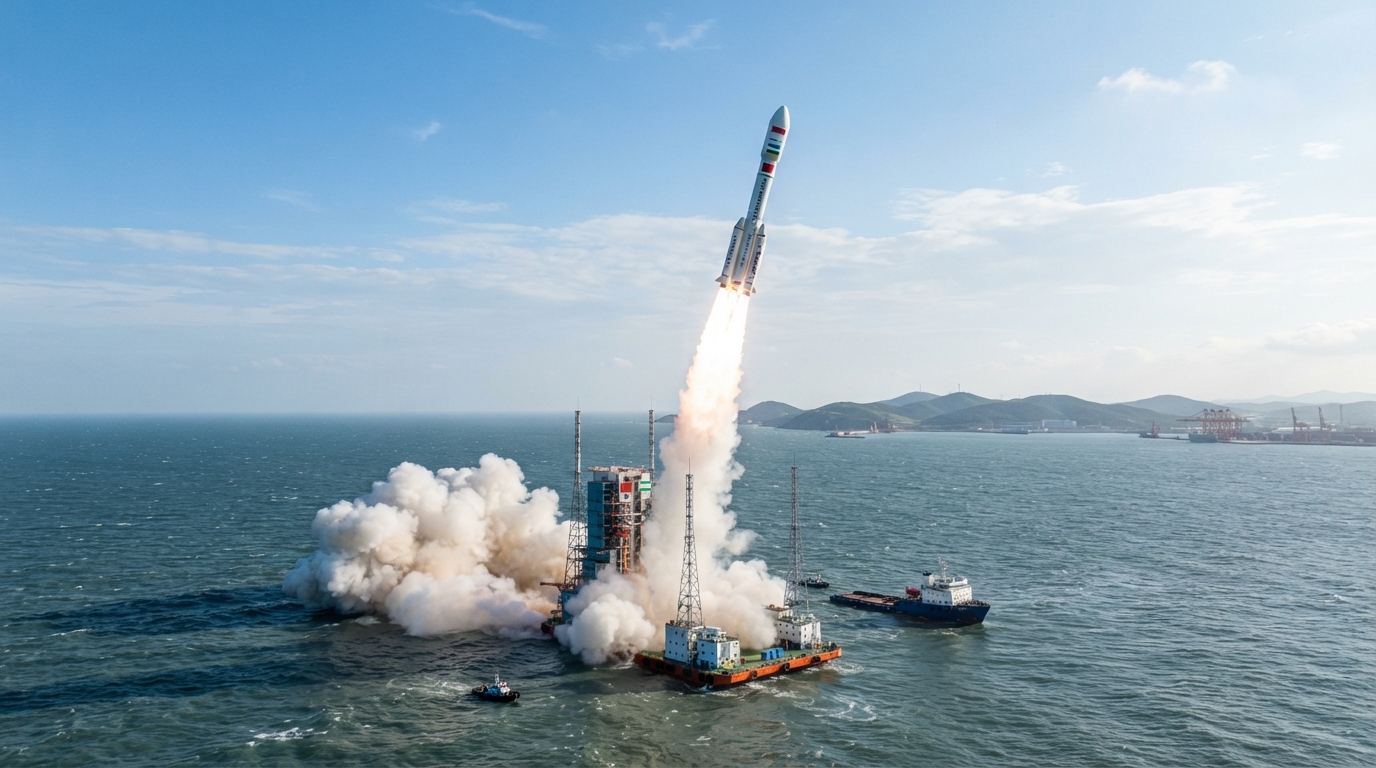
Uzbekistan's Samarkand-2028 satellite, named to commemorate Samarkand's selection as the host city for the 2028 International Astronautical Congress over Mumbai and Manama, successfully launched on Wednesday. The liftoff occurred from a sea-based platform situated off China's Shandong province, with the launch window set by Uzbek officials between 7:00 a.m. and 9:00 a.m. Tashkent time. Indonesia's Lampung-1 satellite also launched concurrently.
The Samarkand-2028 satellite is owned by the Chinese company STAR.VISION, a specialist in satellite design, intelligent satellite systems, and AI-driven data analysis. Uzbekistan's involvement included providing the satellite's name, assisting in the development of its onboard artificial intelligence (AI) module, and securing rights to utilize the data it collects. STAR.VISION constructed the spacecraft following a memorandum of understanding signed with Uzbekcosmos, Uzbekistan's national space agency, in November 2025.
The satellite's primary function is hyperspectral imaging, employing sensors capable of detecting features imperceptible to the human eye by capturing data across numerous spectral bands, unlike the limited bands used in standard imaging. Oleg Pekos, First Deputy Digital Technologies Minister, highlighted the practical benefits: the AI module enables the satellite to directly analyze over 22 spectral bands onboard, eliminating the need to transmit raw imagery to Earth for processing. This significantly reduces the time required to transform a raw scan into actionable crop identification results. The key advantage, therefore, lies not in the imagery itself, as many satellites capture images, but in the accelerated process from raw data acquisition to practical output.
Uzbek engineers' specific contribution to the project involved developing the onboard AI system. This marks a significant technical achievement for Uzbekistan's emerging space sector, as it represents the first instance of Uzbek specialists participating in the creation of an AI module for a satellite. However, this contribution is in software for hardware developed by another entity, rather than establishing an independent launch capability for Uzbekistan.