

Record heatwave hits Western Europe
June and July 2026 were the warmest months on record in Western Europe, the European Union's Copernicus climate change service in Bonn said on August 10.
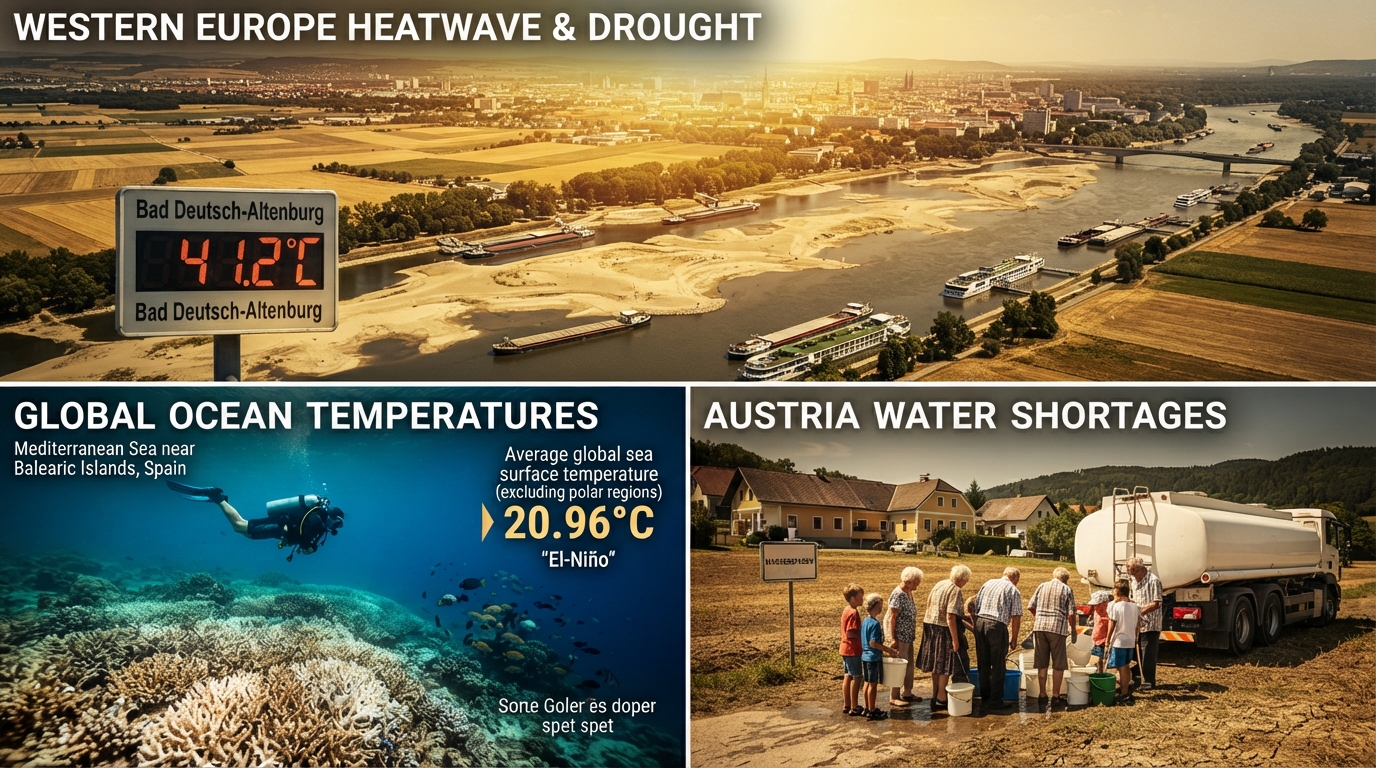
Western Europe has been experiencing unprecedented heatwaves. According to Copernicus, the average temperature in the region in June and July was 21.62 degrees Celsius. This is 2.79 degrees Celsius above the 1991–2020 average for June.
At the same time, the first two months of summer in Eastern Europe and Scandinavia were much cooler than in Western Europe. Copernicus also drew attention to the unusually long duration of heat waves that have been ongoing in Western Europe since late spring. Since May, the region has experienced four severe heat waves. According to experts, this is unusual for Western Europe.
In July, the temperature of the World Ocean, excluding the polar regions, also reached record levels. According to the KNA agency, one of the factors causing this is the natural phenomenon “El Niño” observed in the tropical Pacific Ocean. According to forecasts, this process may intensify in the coming months.
Strong heat waves were also observed in the Atlantic Ocean and the western Mediterranean Sea. The increase in water temperatures is having a negative impact on coastal settlements and marine ecosystems. In July, the average sea surface temperature in the areas from 60 degrees south latitude to 60 degrees north latitude was 20.96 degrees. This is higher than the previous record for July, which was set in 2023 - 20.89 degrees.
On August 5, the hottest day in the history of meteorological observations was recorded in Austria and Slovakia. According to Austria's GeoSphere Austria national meteorological service, the temperature in the town of Bad Deutsch-Altenburg in the federal state of Lower Austria rose to 41.2 degrees Celsius during the day. In the municipality of Kamenica-Gron in southern Slovakia, near the border with Hungary, the temperature reached 41.4 degrees Celsius on the same day. The day before, on August 4, the temperature in the Austrian capital Vienna also broke the national record, reaching 41 degrees Celsius.
The ongoing extreme heat and drought in Austria are increasingly affecting people's lives and nature. Water shortages have occurred in some settlements. Due to the sharp drop in water levels in the rivers, shipping on the Danube and other rivers has been partially suspended. The national meteorological service also warned of the possibility of "extreme heat stress" for vulnerable groups of the population.
Thus, in the first two months of the summer of 2026, not only were historical air temperature records recorded in Western Europe, but problems such as warming ocean waters, drought, falling river levels, and water shortages also intensified.