

Police raid Starbucks Korea headquarters over 'Tank Day' fiasco
People have filed complaints against Starbucks for allegedly making light of the deadly Gwangju Uprising.
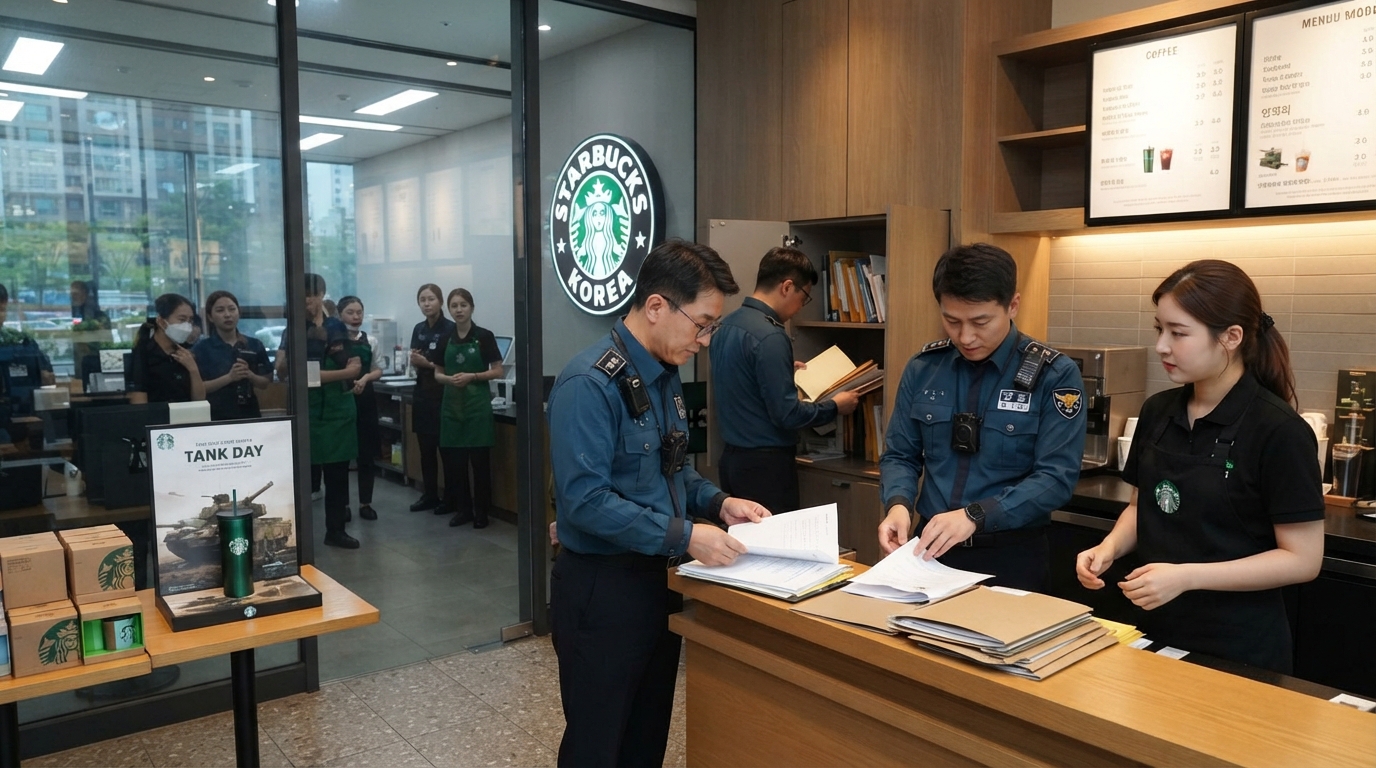
South Korean police have conducted a raid on the national headquarters of Starbucks following defamation allegations related to a contentious marketing initiative.
In May, Starbucks Korea introduced a coffee tumbler promotion called "Tank Day." This launch coincided with the anniversary of the 1980 Gwangju Uprising, an event where military forces are believed to have killed hundreds. Many perceived the "tank" imagery as a reference to the vehicles used to suppress pro-democracy demonstrators, which subsequently triggered a widespread boycott.
Starbucks quickly withdrew the promotion, stating it was unintentional. However, civic organizations filed a criminal complaint, urging police to investigate the company for defaming victims of the military dictatorship.
Shinsegae Group, the operator of Starbucks in Korea, reported that its internal investigation concluded the error was unintentional. The company stated that the team responsible for the promotion did not connect it to the historical event, and upper management also failed to identify the connection.
In June, Starbucks outlets nationwide closed for half a day to allow staff to attend history lessons. Shinsegae apologized for the "inappropriate marketing" and acknowledged that the "Tank Day" controversy had led to a significant decline in Starbucks sales in South Korea, one of the coffee chain's largest markets. The company also dismissed its chief executive.
Reports estimate that hundreds were killed by the forces of military dictator Chun Doo-hwan during the Gwangju Uprising, an event now recognized as a day of national trauma and held sacred by many South Koreans.
Furthermore, promotional materials for the tumbler included the phrase "tak on the table!", which mimicked the sound of an object being slapped. However, "tak" was also the word used in a controversial 1987 police statement describing the death of a student activist in custody.
South Korean President Lee Jae Myung was among those who criticized the campaign, stating it "insults the victims and the bloody struggle" of Gwangju residents. The scandal, which emerged during local elections, became a significant topic of discussion between the two major political parties.
While the internal ministry under President Lee announced a government-level boycott of Starbucks, the opposition leader responded by displaying a Starbucks cup during a speech and accusing the government of overreach. Since then, Starbucks cups have been adopted by right-wing commentators as a symbol of opposition to the Lee Jae-myung government and have appeared in right-wing rallies and livestreams.