

Nukus Heating Plant to Be Modernized With Cogeneration
Uzbekistan plans to modernize Nukus' central heating plant with cogeneration, investing more than US$20 million and connecting 6,000 apartments.
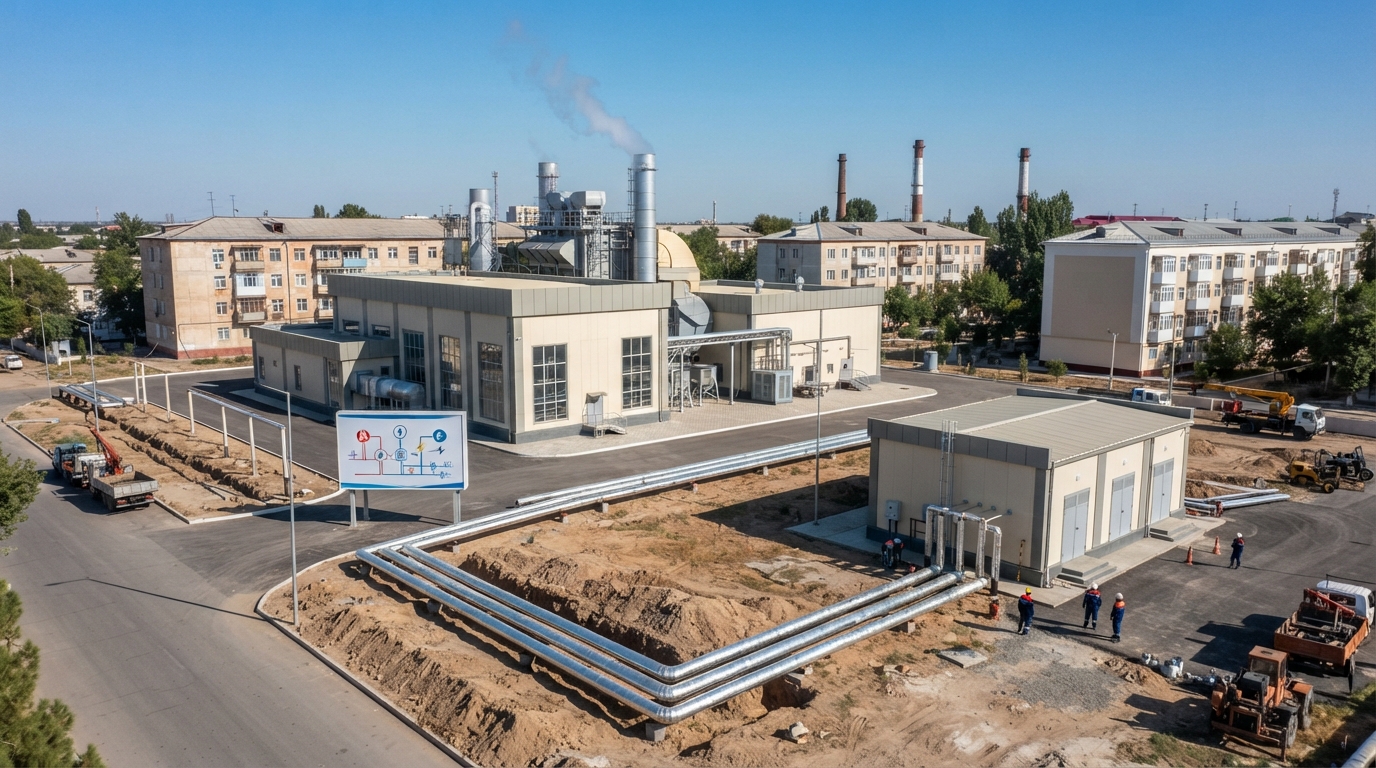
Nukus's central heating plant is set for a major upgrade, incorporating cogeneration technology, as reviewed by Uzbek President Shavkat Mirziyoyev. The initial stage of this project aims to secure over US$20 million in foreign direct investment and extend central heating services to approximately 6,000 apartments.
Constructed in 1976, the existing Nukus heating plant primarily serves public institutions. Its equipment is outdated both physically and technologically, leading to low energy efficiency. Currently, producing 1 Gcal of heat consumes about 153 cubic meters of natural gas and 30 kWh of electricity, with the plant's actual capacity at 1.6 Gcal per hour.
Only 47 apartment buildings in Nukus currently have central heating, while 270 others rely on local heating systems. Many other apartment buildings use improvised heating devices, which are not only energy-intensive but also pose safety risks to residents.
The modernization will proceed under a public-private partnership, utilizing a cogeneration unit to simultaneously produce heat and electricity from a single fuel source.
The project scope includes building a new facility with a thermal capacity of 34.4 Gcal per hour and an electrical capacity of 21.5 MW. It also entails laying 28 km of heating networks and installing 189 individual heating substations. Additionally, internal heating systems in apartment buildings and social facilities will be restored, and the necessary gas and electricity infrastructure will be upgraded.
During the first phase, central heating will be extended to about 6,000 apartments across 136 buildings, benefiting around 23,000 residents, along with 40 social facilities. The long-term objective is to connect all apartment buildings and social facilities in Nukus to the central heating system.
The new complex is slated for full operation by February 2028. Post-modernization, the plant's efficiency is projected to rise from 80% to 91%. This is expected to result in annual natural gas savings of 12.2 million cubic meters and generate 172,000 MWh of electricity.
Furthermore, the project is anticipated to reduce harmful atmospheric emissions and create 19 new jobs. Employees will receive training in operating modern equipment and new technologies.
President Mirziyoyev directed officials to ensure reliable, safe, and high-quality heating for residents throughout the project's implementation and to complete construction on schedule and to the required quality standards.
Proposals for modernizing heating plants in Bukhara, Samarkand, Urgench, and Zarafshan, drawing on the Nukus experience and incorporating cogeneration and trigeneration technologies, were also reviewed.