

The Mediterranean diet was a blueprint for healthy living, yet Italian children are among the most overweight in Europe according to WHO.
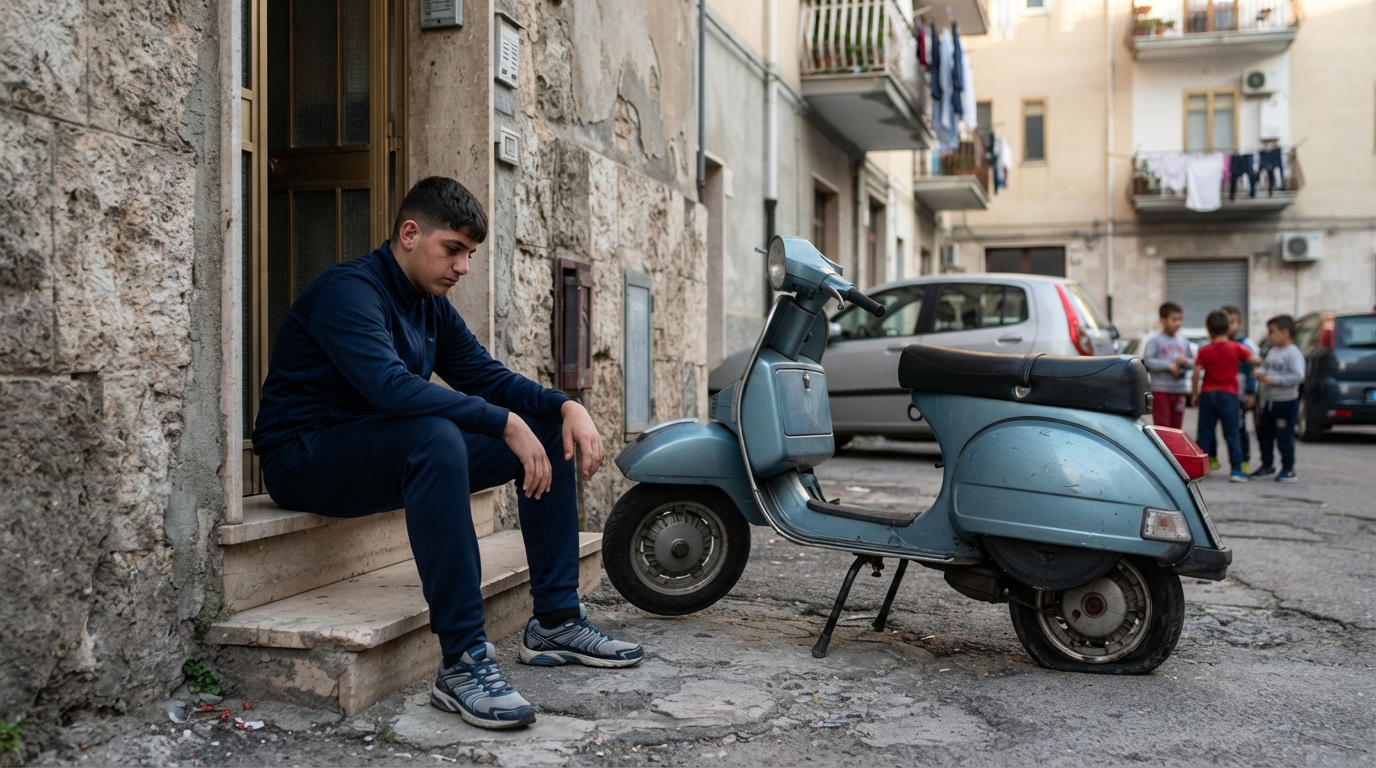
The daily routine presents significant challenges for Salvatore, a 17-year-old who weighs 170kg (26st 10lb) and finds walking difficult. He cannot fasten his own shoelaces, and his Vespa scooter struggles under his weight, with its wheels breaking seven times in a single week. His mother, Anna, notes, "He eats constantly."
Salvatore is one of a growing number of Italian children and adolescents grappling with obesity. This issue is particularly pronounced in the southern regions, where over 40% of eight and nine-year-olds in parts of Campania are classified as overweight. The town of Ponticelli, located on the outskirts of Naples, has gained the unfortunate distinction of being recognized as one of the world's child obesity hotspots.
This trend marks a striking shift for a nation historically celebrated as the birthplace of the Mediterranean diet. Yet, according to the World Health Organization (WHO), Italian children are now among the most overweight in Europe.
Salvatore is awaiting a life-altering surgical procedure at Betania Hospital in Ponticelli, where Dr. Sonja Chiappetta has dedicated 15 years to treating patients with severe obesity. Dr. Chiappetta observes that, until recently, most of her patients were in their fifties. "Now I see those same patients when they're teenagers, as young as 16. They are getting younger, and it's frightening," she states. The surgery she performs involves removing up to 90% of the stomach, which prevents individuals from consuming large quantities of food. Demand for this procedure has surged in this part of Italy.
However, Salvatore has been informed that he cannot undergo the operation because his weight is so excessive that it makes the surgery too risky. Instead, Dr. Chiappetta has prescribed him a GLP-1 weight-loss injection to curb his appetite and help him shed enough weight to qualify for the procedure.
For decades, Italy was considered a paradigm of healthy eating, widely regarded as the spiritual home of the Mediterranean diet. This diet, characterized by its