

Midnight social media curfew proposed for older UK teens
Teens will be able to opt out of the restrictions - campaigners have criticised them as being piecemeal.
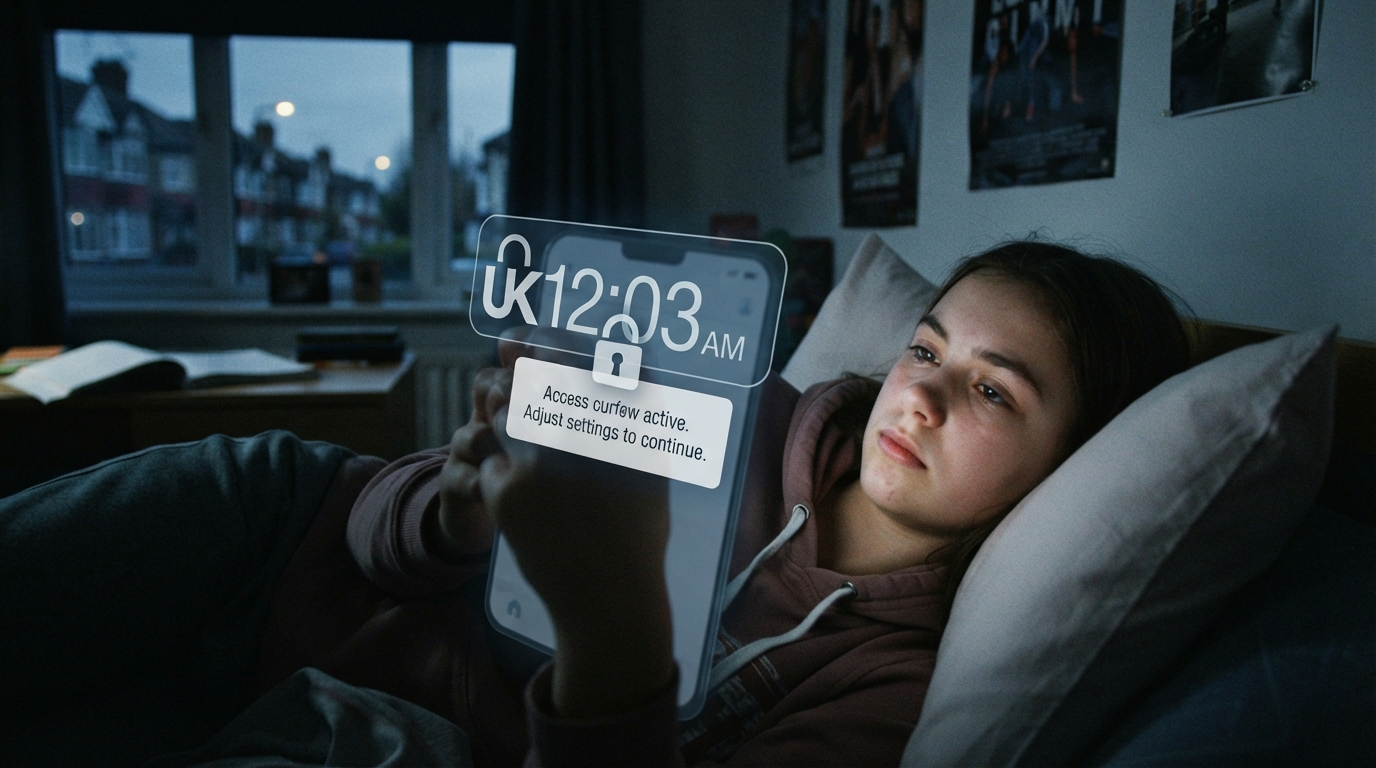
UK Government Proposes Midnight Social Media Curfew for Older Teens
The UK government has announced a proposed overnight social media curfew for older teenagers, specifically those aged 16 and 17. However, these teens will have the option to opt out by adjusting their account settings. This initiative would mean that platforms like Instagram, TikTok, and YouTube would be inaccessible by default from midnight to 6:00 AM for this age group.
In addition to the curfew, the government aims to disable "addictive" features such as auto-play and infinite scroll. Officials believe that these measures, combined with the curfew, will enhance teenagers' focus, improve their sleep quality, and foster better family interactions.
Critics, however, have labeled the proposals as "piecemeal" and a "missed opportunity" for enhancing children's safety. These plans come on the heels of a June announcement that would prohibit under-16s in the UK from accessing various social media platforms entirely.
"These measures will be crucial in helping young people get the sleep they need, focus on school and college, and spend more quality time with family and friends, all of which are fundamental to building a happy, healthy, and fulfilling adult life," stated Technology Secretary Liz Kendall. "We want young people to enjoy the benefits of technology while having the tools to make the online world a place where they can thrive."
Laura Trott, the Conservative shadow education secretary, criticized the plans, calling them a "dog's dinner." She remarked, "Either they think 16 and 17-year-olds should be on social media or they don't, but curfews they can simply switch off won't achieve anything."
The government also indicated that additional measures would be introduced to ensure children can use AI chatbots safely, including requiring providers to implement regular breaks for users under 18. The government plans to present these new proposals to parliament by the end of 2026, aiming for them to coincide with the social media ban for under-16s set to take effect next spring.
However, some child safety organizations and experts have expressed skepticism regarding the effectiveness of a midnight curfew for older teens. Andy Burrows, chief executive of the Molly Rose Foundation, stated, "While we welcome these measures for older teens, this latest move is yet another piecemeal set of announcements, not the comprehensive plan for children's safety that's required." He added that Prime Minister Sir Keir Starmer "leaves office having announced a social media ban without a plan," leaving his likely successor Andy Burnham to "inherit a series of missed opportunities."
Professor Sonia Livingstone, a specialist in children's digital rights at the London School of Economics, warned that a curfew could negatively impact vulnerable children by restricting their access to social media when they might need it most. "If it's a curfew on companies using push notifications to wake someone up in the night, absolutely have a curfew," she told the BBC. "But if it's a curfew that prevents a child in need of support or help or comfort from reaching out to trusted sources in the middle of the night, I think that's quite harmful potentially."
The government previously trialed various interventions, including overnight curfews, in select UK households. The trial involved 300 teens who had their social media apps either completely disabled, blocked overnight from 9:00 PM to 7:00 AM, or limited to one hour of use, while some experienced no changes at all. The government reported that the curfew trials yielded the most significant benefits in terms of sleep, family engagement, and a more manageable setup for parents. "These findings show what parents have been telling us all along: when children spend less time on social media, the benefits are real," Kendall commented on the results.
However, Pete Etchells, a professor of science communication at Bath Spa University, cautioned against placing too much reliance on these findings. "This is a small study that is one part of the puzzle in trying to understand how children and parents will navigate technology restrictions in a practical way," he noted.
The proposals from the prime minister mirror Australia's recent actions, which banned social media for under-16s. Australia's restrictions, implemented in December, led to numerous social media platforms shutting down teens' accounts and preventing them from creating new ones. However, these measures have faced criticism for being ineffective, with many teens claiming they can still access the supposedly banned sites. This, along with concerns about the feasibility of age verification for under-16s, has raised questions about the UK adopting similar measures.
Another area of concern has been the government's suggestion of potential restrictions on virtual private networks (VPNs). On Tuesday, the government, referencing findings from commissioned research, stated that there was little evidence to suggest that many children were using VPNs to bypass age checks.
Additional reporting by Chris Vallance.
Sign up for our Tech Decoded newsletter to stay updated on the latest tech stories and trends. If you're outside the UK, sign up here.
Did Australia's under-16s social media ban work? The social media ban