

Labor migration from Uzbekistan to Russia declines as tighter rules reshape regional job market
The number of work-related entries by Uzbek citizens into Russia declined by more than 13.2% in the first half of 2026 compared with the same period last year.
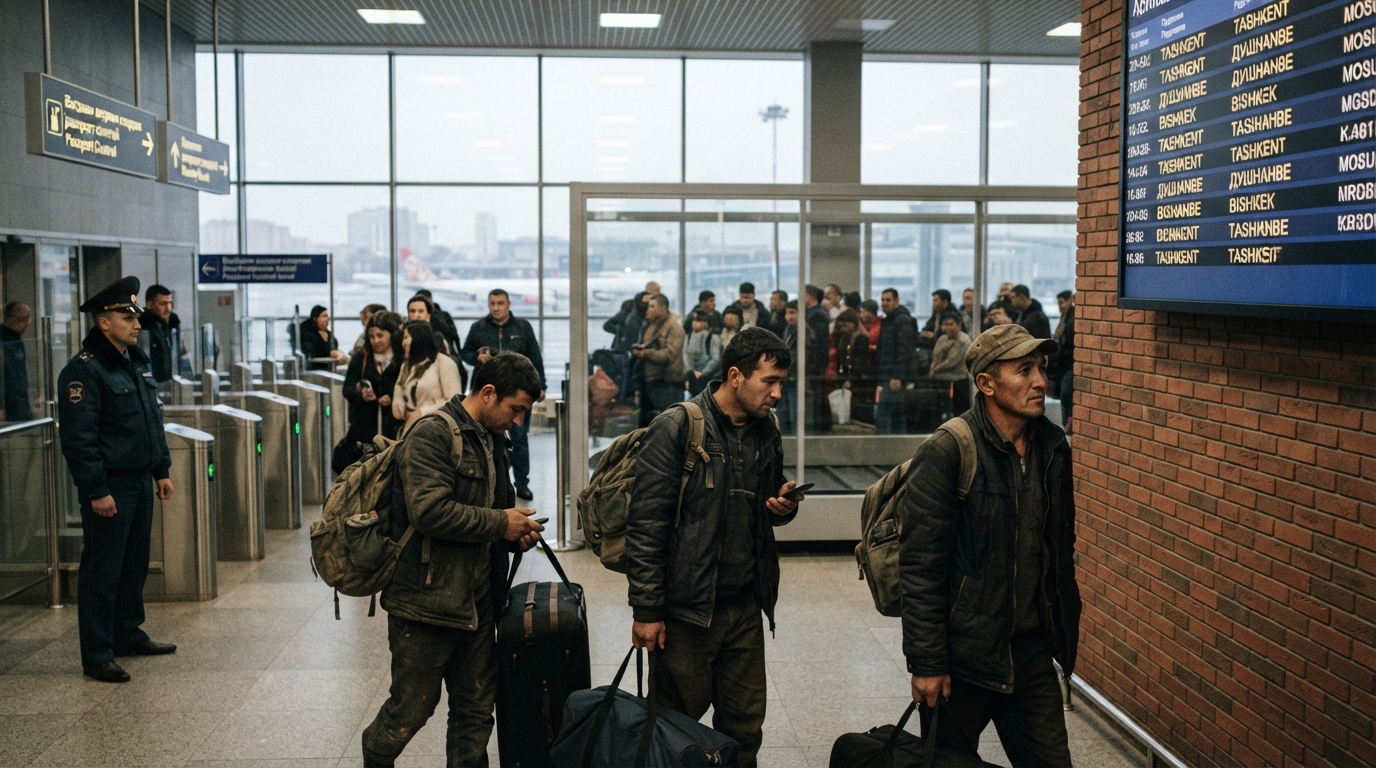
Uzbekistan's labor migration to Russia is experiencing a downturn, influenced by more stringent regulations that are redefining the regional employment landscape.
Despite this reduction, Uzbekistan maintained its position as the primary origin for labor migrants seeking employment in Russia, as reported by *Vedomosti*, citing data from the Russian border service.
From January to June, Uzbek citizens recorded over 1.17 million entries into Russia for work purposes. Tajikistan followed, with 494,500 work-related entries, marking a 17.9% decrease compared to the previous year. Kyrgyzstan secured the third spot with 289,100 entries, a 16.7% decline.
Collectively, citizens from Uzbekistan, Tajikistan, and Kyrgyzstan made approximately 1.9 million work-related entries into Russia during the first half of the year. This represents an overall decrease of about 15% when compared to the more than 2.3 million entries recorded during the same period last year.
Alexander Safonov, a professor at the Financial University under the Government of the Russian Federation, attributed this decline partly to Russia's more rigorous migration policies and the escalating costs associated with work permits. He also highlighted the increased financial burden on migrant workers, encompassing expenses for medical examinations, accommodation, and travel.
Safonov further noted that evolving labor market dynamics in Central Asia have played a role in this trend. Increased Russian and Chinese investment in the region is generating new job prospects. Concurrently, workers from Uzbekistan, Tajikistan, and Kyrgyzstan are broadening their job search beyond Russia to include South Korea, China, the Middle East, and the European Union.
Anna Minushkina, chair of the Moscow Bar Association Minushkina and Partners, observed that both foreign workers and their employers are demonstrating greater adherence to migration regulations. She also pointed out that Russian companies are increasingly exploring the option of hiring employees from countries that require visas, a development that could further alter the composition of labor migration.