

Israel accused of weaponising archaeology at ancient West Bank sites
Israel is planning large-scale land expropriations in historic, Palestinian areas of the West Bank.
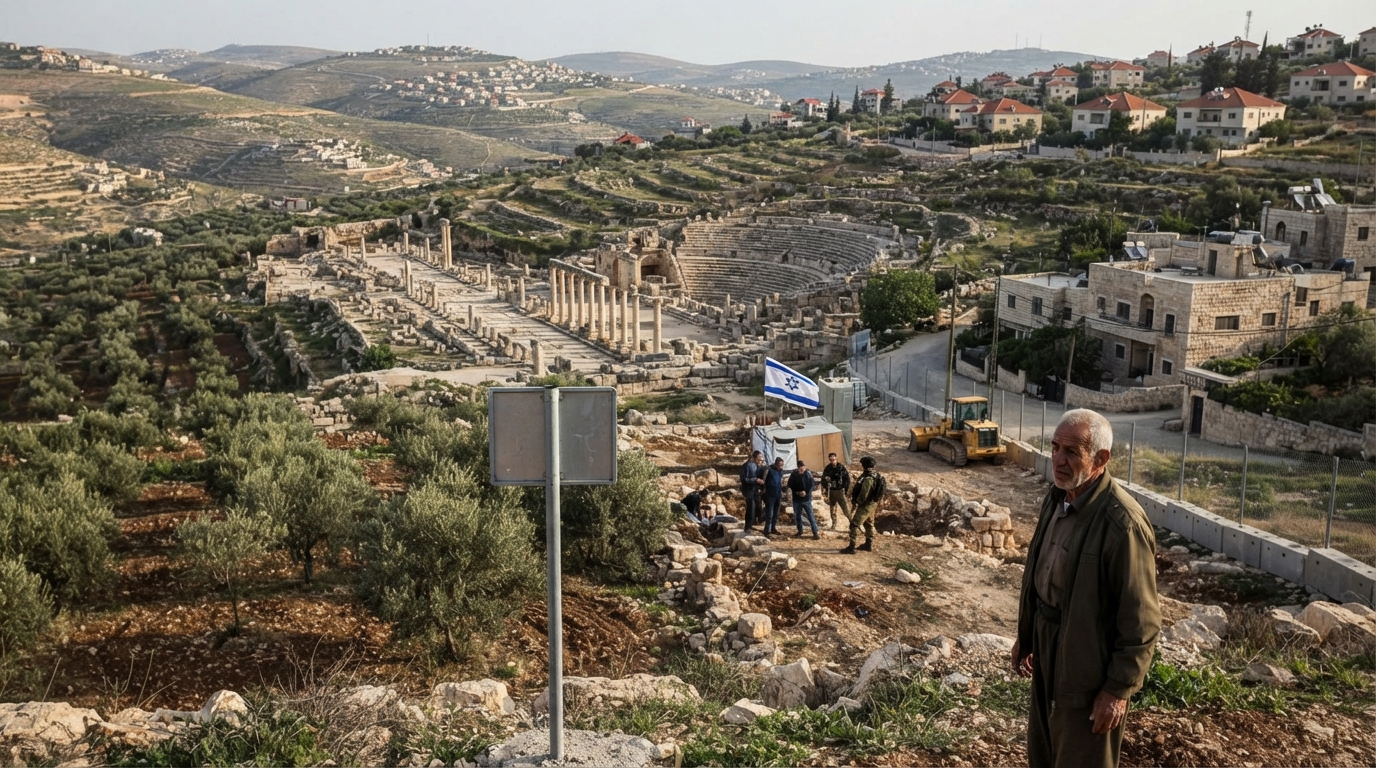
Israel is facing accusations of leveraging archaeology as a tool in the West Bank, particularly at ancient sites like Sebastia.
In the hills above Sebastia's Roman columns, Palestinian families have cultivated olive fields for generations. One landowner, Abu Mudif, has been notified that his land is part of a 450-acre tract that Israeli authorities are seizing. The stated purpose is to protect and develop the site for a new national park.
Palestinian landowners typically receive minimal or no compensation for such land expropriations. Many refuse any offered payment, viewing acceptance as legitimizing the loss of their heritage. For Abu Mudif, losing this land means not only a vital income but also a profound personal loss. He describes it as "like having your soul ripped away. I cannot imagine myself without my land."
Nahed Sakha, who owns a local restaurant facing demolition, believes the Israeli plan aims to isolate Palestinian residents from the archaeological site. This site, thousands of years old, contains significant remains from ancient Jewish history, as well as Roman, Crusader, and Ottoman eras. Sakha notes that "Restoration work has now begun along with excavations," and landowners have been informed they are prohibited from using or plowing their land.
Unesco recently added Sebastia to its World Heritage List on July 25, following an emergency procedure, and also placed it on the List of World Heritage in Danger. Unesco cites the primary threat as the "planned expropriation and creation of the 'Samaria' (Shomron) national park, which could divide the property."
Mohammed Azem, the village mayor, observes that locals are now hesitant to clean rubbish in the ruins for fear of issues with Israeli security forces and settlers. The path he stands on divides the site between Area B of the West Bank (under Palestinian civil and Israeli security control) and Area C (under full Israeli civil and security control).
Last week, Israel allocated approximately 113 million shekels (£27.8m) to expand its control over West Bank archaeological sites, including some within areas administered by the Palestinian Authority.
Alon Arad, an Israeli activist who heads Emek Shaveh—a group advocating for the region's ancient heritage to belong to all communities—states that Israeli authorities have bypassed consultation with Sebastia's local administration and residents. Arad emphasizes, "The thing is that Israel is not the owner of this place. This is a Palestinian heritage site. And in order to develop it in a positive way, it has to be done with the local community, with the municipality, so they can benefit."
The Israeli plans would relocate Sebastia's entrance away from the village and current car park and shops. The Palestinian tourism and foreign ministries hope Unesco's recognition will bolster international support against Israeli land seizures in Sebastia. However, Israeli Foreign Minister Gideon Saar has characterized Unesco's action as enabling Palestinian efforts to diminish historical Jewish ties to the West Bank, asserting, "No vote in an international organisation can change history."
Further south in the West Bank, near Jerusalem, lies Herodium, a man-made hill with a palace built by King Herod. Here too, Israel has begun expropriating land—about 80 acres—for "preservation and development." Peace Now, an Israeli organization monitoring settlements, states that international law and Israeli Supreme Court rulings prohibit land expropriation solely for settlement purposes or the benefit of Israeli citizens. They suggest that to be lawful, the state will likely argue the site serves both Palestinian and Israeli populations, despite its apparent link to settlement expansion and Israeli control.
Shmuel Browns, a guide who has worked on excavations at Herodium, believes it is crucial for Israeli archaeologists and officials to oversee and protect sites of such historical and religious significance. He says, "Israel feels responsible to look after the archaeology, the artifacts, the history of this land."
However, some far-right members of Israel's government have sought to go further. A proposed law earlier this year would have transferred control of archaeological sites from the Civil Administration (under military authority) to the Israeli heritage ministry, granting it broad powers to seize land for archaeological preservation across the West Bank. This bill passed its first reading in May but is now on hold due to upcoming elections.
Back in Sebastia, Alon Arad argues that the mere introduction of this bill demonstrates how archaeology itself has been "weaponized" in the West Bank. He warns, "This is exactly how the mechanism works. You use archaeology, you use it in order to do excavations and to the narrative, to rewrite history, but you also use it in order to allocate lands or reallocate lands from Palestinian to Israeli."
Palestinian residents of Sebastia increasingly fear losing their deep connection to the ruins.