

Is AI facing a big financial reckoning?
Sharp falls in the value of chip makers have stoked investor concerns that the euphoria around AI related companies is fading.
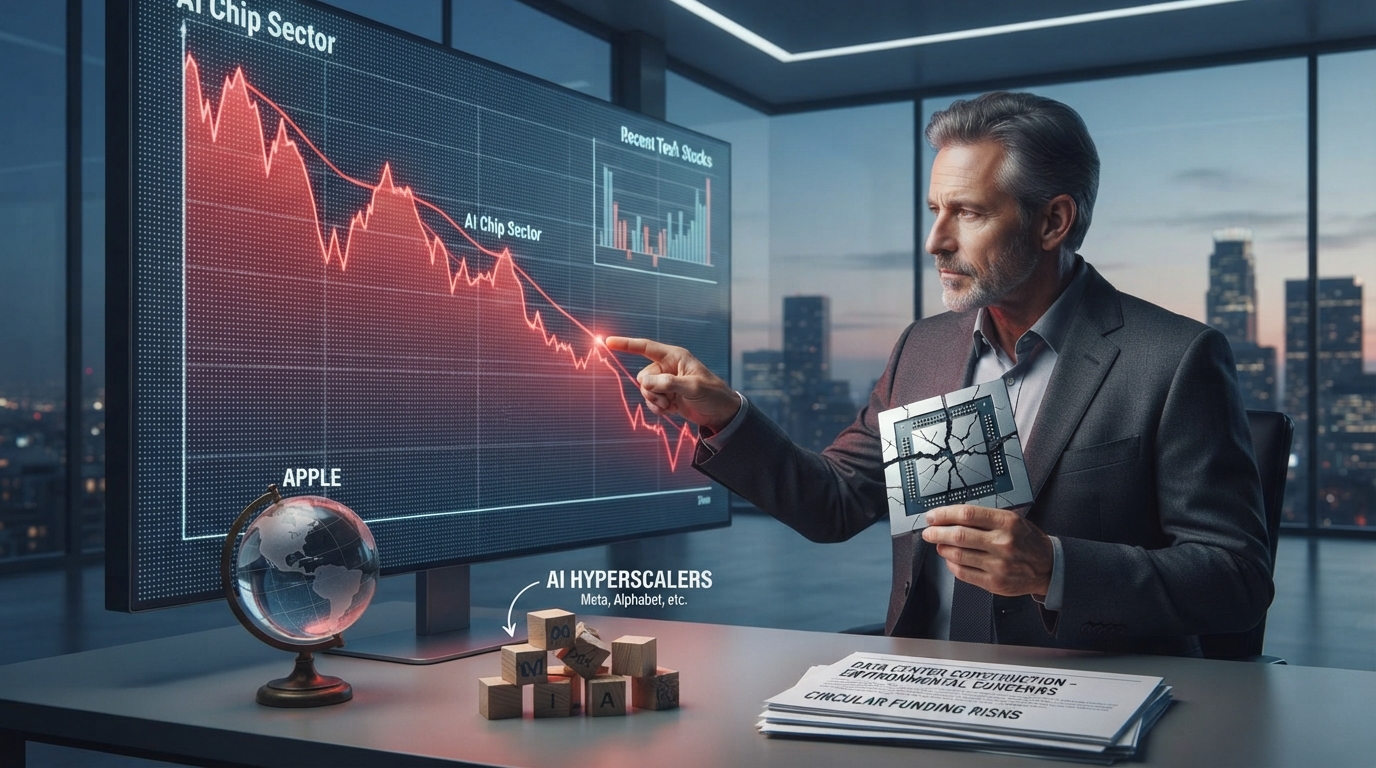
Is the artificial intelligence sector on the verge of a significant financial reassessment?
Investor apprehension is mounting that the enthusiasm surrounding AI-related enterprises is diminishing, evidenced by substantial declines in the stock values of chip manufacturers. Over the past month, shares in South Korean chip producers SK Hynix and Samsung have fallen by 46% and 35% respectively. This downturn reflects investor concerns regarding the sustainability of the recent surge in demand for the chips that power AI technologies.
While the South Korean stock market is known for its volatility, these worries have extended to major U.S. corporations. Micron and Intel have experienced declines of 28% and 35% since last month.
"The AI bubble hasn't burst but it's letting out air," commented Eileen Burbidge, a prominent tech investor, to the BBC. She noted that a confluence of factors across various segments of the AI ecosystem is contributing to a more somber mood.
One catalyst for the recent stock drops was a reported breakthrough in chip manufacturing by a Chinese company. This development could potentially enhance China's self-sufficiency in chip design and production.
This adds to existing concerns that major AI companies—such as Meta, Alphabet, OpenAI, and Anthropic—may struggle to charge end-users sufficiently to justify the hundreds of billions being invested in acquiring chips and constructing the data centers essential for the technology.
Historically, increased AI spending by so-called hyperscalers was met with investor approval. However, recent escalations in spending have not been met with the same level of enthusiasm. Meta's shares have dropped 15% over the last month. SpaceX, primarily an AI company, has seen its shares fall 14% from its highly anticipated IPO debut and nearly 50% from its peak in June.
In contrast, Apple, which has largely remained outside the AI "arms race," has seen its shares climb 21% over the past month, reclaiming its position as the world's most valuable company from chipmaker Nvidia.
London's benchmark FTSE 100 index, which lacks major tech companies, briefly reached a record high on Wednesday morning. This period was one of the rare instances where its lack of tech-heavy constituents proved advantageous.
Some have drawn parallels between AI's transformative potential and the advent of electricity or railways. While railways undeniably revolutionized economies, particularly in the U.S., many investors lost money along the way. Unlike railway tracks, which can last for decades once built, data centers will likely require frequent upgrades to incorporate the latest and fastest processors.
Furthermore, concerns exist regarding significant stakes or loans exchanged among some large AI companies, creating a circular funding structure. This arrangement means that potential failures in one company could have detrimental effects on the financial health of others.
There is also growing cultural resistance to the expansion and adoption of AI. An increasing number of national, state, and local governments are pausing, banning, or restricting new data center construction due to environmental concerns related to their substantial water and energy demands. Concurrently, high-profile AI proponents have faced boos from students who fear that AI will displace many graduate-level jobs.
Despite these challenges, Eileen Burbidge maintains an optimistic outlook. "I see the glass half full - if you bought shares in chip makers a year ago you are feeling pretty good right now." Shares in Samsung and SK Hynix have increased threefold and fivefold respectively over the past year. This has led many to conclude that caution and profit-taking after such substantial gains were both inevitable and healthy.
Nevertheless, investors are undoubtedly scrutinizing companies' spending plans and their projections for repayment with post-euphoric vigilance.
**Related Headlines:**
* Chip stocks slide in US and Asia as AI jitters rattle investors
* World's largest chipmaker does not rule out price rises as costs increase
* Chinese chipmaker shares surge nearly 470% in blockbuster stock market debut