

I left my wife and twins behind - why this Nigerian man fled South Africa
Nigerian Richard Itoro is one of tens of thousands who have abandoned their lives in South Africa.
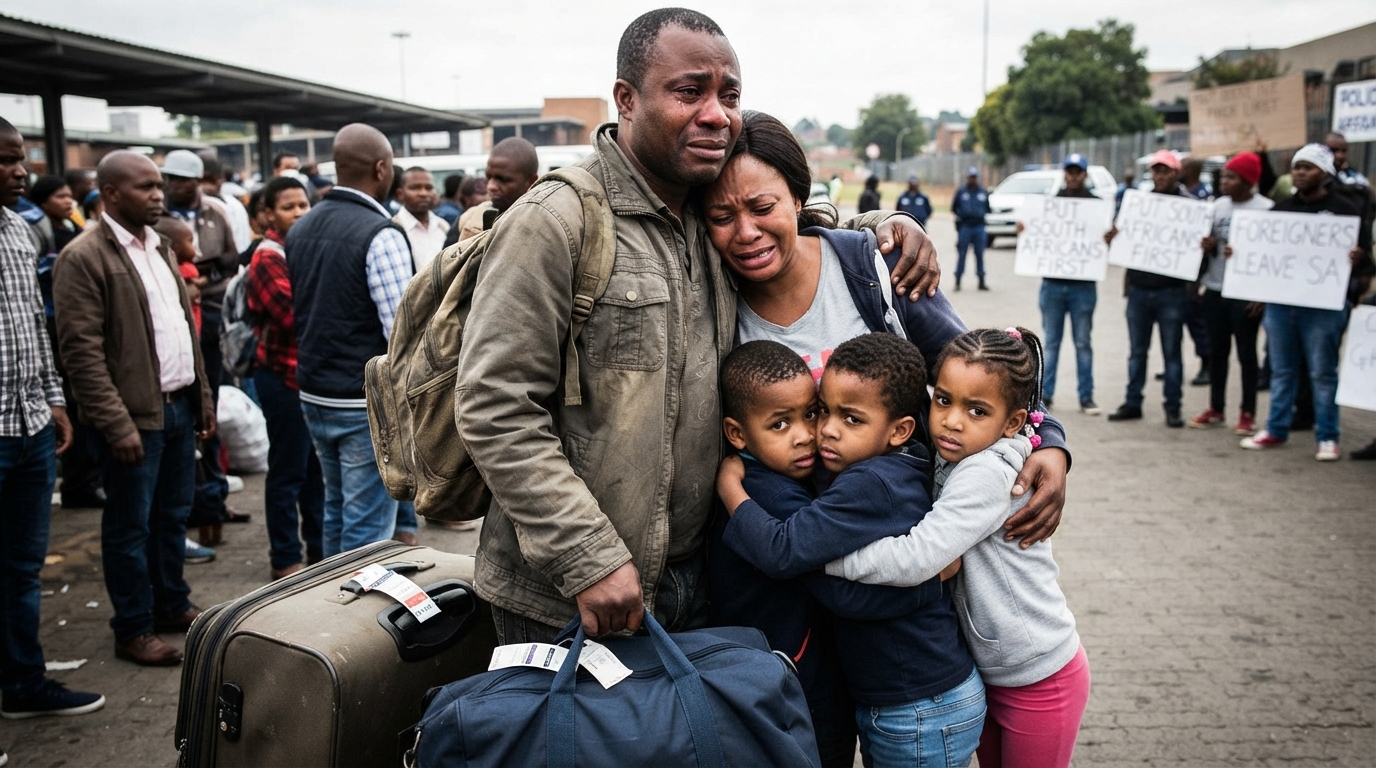
Richard Itoro, a 47-year-old Nigerian man, made the difficult decision to leave his wife and twin children in South Africa, returning to Nigeria in June due to escalating anti-migrant protests. He views starting over in Nigeria as a better alternative to remaining in South Africa, where he feared for his safety.
Itoro's experience is one of many contributing to diplomatic tensions and threatening to strain relations between South Africa and other African nations. In the past two months, tens of thousands of foreigners have departed South Africa.
With tears in his eyes, Itoro recounted to the BBC the pain of leaving his South African wife, whom he described as his "best friend." Over 15 years, he had established a car dealership, purchased a home, and built a family, all of which he has now lost.
Itoro became a target of harassment, and his wife also faced intimidation. He stated that neighbors told her, "You're married to a Nigerian. Those of you who are married to Nigerians we are supposed to arrest you people. You guys betrayed us. Go and leave the country with your husband and don't be here." Itoro expressed his bewilderment, saying, "My family was just a small family, which was beautiful and peaceful. I had no issues with anybody."
The mounting pressure became unbearable for Itoro. He explained, "If I go home and start all over again, it's better than being here, being harassed, being scared for my life." Marches advocating for undocumented migrants to leave reached their peak at the end of June.
However, Itoro stated that the Nigerian high commission did not permit his wife and children to travel with him. He likened his departure to someone boarding the final helicopter out of a besieged city. "I wish I could have just begged the people from the embassy and said: 'This is my wife, I can't leave her behind and my kids,' but I couldn't. So my car started departing and I wished I had told her not to cry."
Anti-migrant groups in South Africa asserted that their protests targeted undocumented foreigners. Gayton McKenzie, South Africa's outspoken Culture Minister and a leader in the coalition government, reiterated this point, telling the BBC's Interview programme, "We say South Africa is open to our brothers on the continent but come here legitimately. Come with your papers."
Despite this, Itoro claims his legal status did not shield him from hostility, presenting the BBC with a document he says proves his right to reside in the country. Nigerian authorities corroborate that he was not an isolated case. Nigeria's Minister of State for Foreign Affairs, Sola Enikanolaiye, stated during a recent meeting with South Africa's Foreign Minister Ronald Lamola, "We have records of Nigerians who have legitimate papers to remain in South Africa, yet they have been attacked."
Tensions heightened last week following the death of a Nigerian man during his arrest by police for suspected drug offenses, an incident now under investigation by an independent body. Lamola affirmed that South Africa addresses those who resort to vigilantism but also emphasized President Cyril Ramaphosa's firm stance on "South Africa's sovereign right to enforce its immigration laws."
South Africa's reputation has suffered significantly despite diplomatic efforts, partly due to circulating social media images and videos. While some were misattributed, a genuine video involving Ghanaian hairdresser Emmanuel Asamoah sparked considerable concern when it was shared in April.
Asamoah, 37, moved from Ghana to South Africa in 2023, seeking opportunities. He settled in Soweto, near Johannesburg, found work, and envisioned a future in one of Africa's largest economies. However, three months ago, his future became uncertain when he was confronted by a group of South Africans demanding his departure. The encounter was captured on video, with one woman telling Asamoah, "This thing of you guys moving from one country to another… is no longer working. Now, we are making it very clear to you guys, we don't want you here. We want you to fix your countries."
Having returned to Ghana's capital, Accra, in May, Asamoah told the BBC that the incident left him terrified. "They came to me and started pushing me... So, they started asking questions and harassing me… they said that I should go home, that we are spoiling their country, because of us, they don't eat, we are taking their girlfriends," he recounted.
South Africa's high unemployment rate, exceeding 30%, is considered a contributing factor to the tension, a sentiment echoed by McKenzie. He stated, "No man can feed another man's children while his children are starving. Our people are starving of jobs," supporting calls for those without proper documentation to leave.
Asamoah, however, maintains he had a valid passport stamp granting him permission to stay. "I was not illegal. I was legal in South Africa. That's why I told them that, they can take me to the police station so that we can go to Home Affairs and verify," he asserted.
Returning home has unexpectedly provided Asamoah with a new beginning. With the assistance of a Ghanaian businessman, he has launched a cement business and is determined to build his future. "My brother and sisters in South Africa. I'm in Ghana now. I'm fixing my country," he declared.
Ghana's government remains critical of how its citizens are perceived in South Africa. In a BBC interview, Foreign Minister Samuel Okudzeto Ablakwa expressed his view that these actions contradict the spirit of continental solidarity and disregard the role African countries played in the anti-apartheid struggle, which concluded in 1994. He questioned, "South Africa should be the epitome of Pan-Africanism. We talk about African integration. We talk about free movement… even if you have issues with high immigration, is this how you resolve it?"
In Lagos, Itoro continues to long for his family. "It's not easy. But we talk every day, and I'm broken. There is hope, because... my wife is going to join me very soon, as soon as God lifts me up. But it was heartbreaking, and that's how I felt: like I lost everything," he shared.