

How Spain's migrant crisis created a political storm - whipped up by social media
The Ceuta crossings have shaken Europe politically, exposing divisions over the sensitive issue of migration, the BBC's Sarah Rainsford writes.
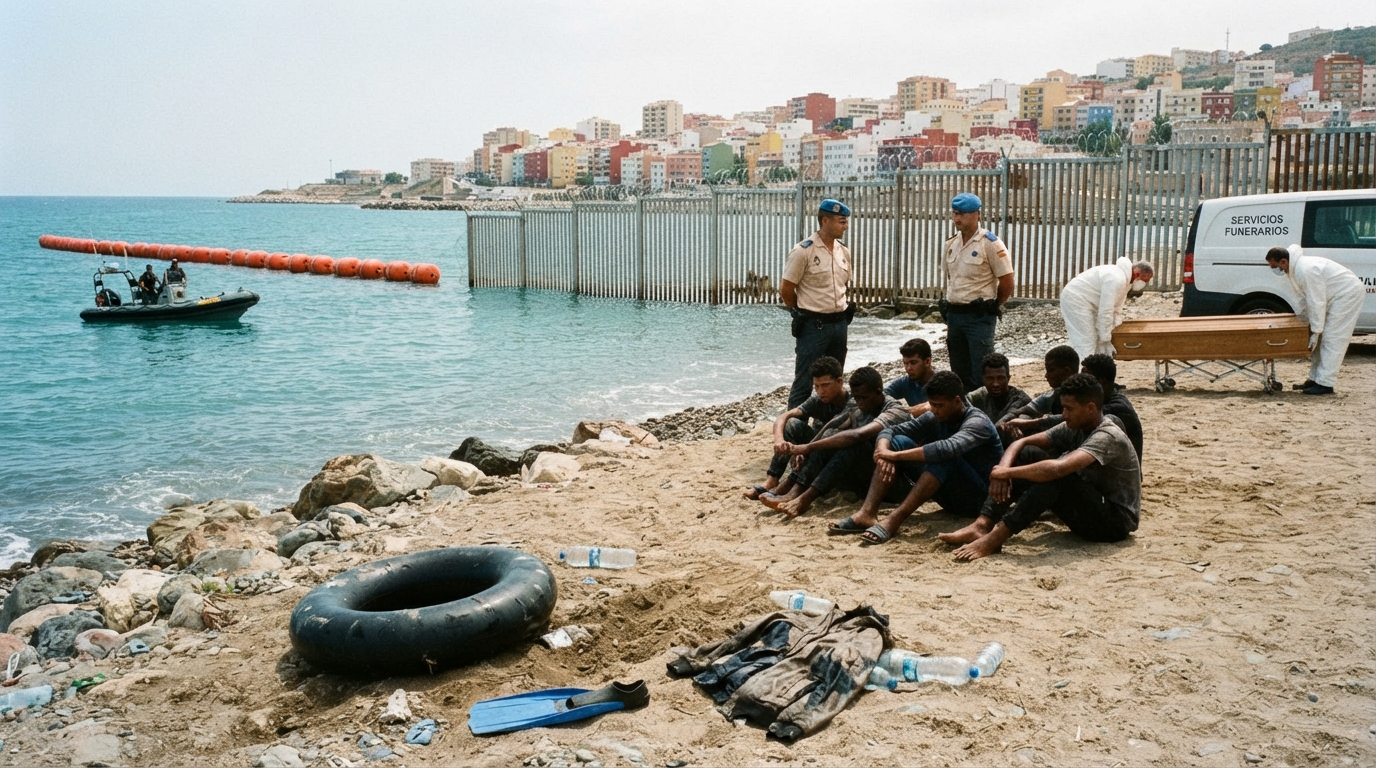
The recent migrant influx into Spain's Ceuta, which saw tens of thousands swim into the Spanish exclave, has ignited a political firestorm, fueled in part by social media. While most of the migrants have since been escorted back to Morocco by Spanish forces, the surge has tragically claimed at least 67 lives, with bodies recovered from the sea alongside discarded rubber rings and flippers.
This week's events have sent ripples through European politics, once again highlighting deep divisions over migration. Lingering questions remain about the catalyst for the sudden influx: whether it was a spontaneous viral spread of social media posts promising easy access to Europe, or a more deliberate, even orchestrated, effort.
Regardless of the cause, Spain's socialist Prime Minister, Pedro Sanchez, has expressed anger at the international response. He criticized certain EU members, particularly Italy, for "attacking" Spain during the crisis and engaging in political maneuvering instead of offering support.
Italy's hard-right Prime Minister, Giorgia Meloni, and her Fratelli d'Italia party swiftly posted images of migrants in Ceuta, declaring, "This is the Sanchez model the Italian left wing likes so much." Meloni subsequently announced the suspension of Italy's Schengen agreement with Spain, which permits free movement, citing a security threat.
Madrid is incensed, arguing that the crisis has been contained and that Ceuta, being outside the Schengen zone, meant Moroccan migrants were never destined for unchecked entry into mainland Europe. Spain believes Meloni is aware of this, but with elections approaching next year and her coalition losing ground to a new, fiercely anti-immigrant party, she seized the opportunity to project a tough stance and regain votes.
Italy is not alone in perceiving Spain as lenient on migration. Meloni's call for an urgent meeting of interior ministers, scheduled for Tuesday, garnered support from nearly two dozen EU heads of state. They advocate for the elimination of all policies that could act as "pull factors" to Europe, primarily targeting Spain's controversial initiative allowing hundreds of thousands of undocumented migrants to apply for residence and work permits to "regularize" their status.
The Spanish government defends this as a pragmatic approach, given Spain's aging population and need for workers. However, those who flocked to Ceuta's beaches this week were not seeking to enroll in a program that has already concluded.
Sanchez, instead, points to a recent Spanish Supreme Court ruling that stated those entering by sea cannot be immediately pushed back. The Prime Minister contends that smugglers misrepresented this ruling to promise an easy route to Europe. However, the majority of those heading to Ceuta were Moroccan and did not require smugglers, as the route is well-known. The message, in fact, spread online.
Migrants have shown reporters social media posts depicting individuals shouting "Spain is Open" and jumping into the sea. Multiple verified accounts display young people in wetsuits and flippers, or filming themselves swimming, interspersed with images from inside Ceuta. Some of these accounts are only weeks old, yet several boast tens of thousands of likes.
All these promises proved false. The crowds who joyfully reached Ceuta's shore found nothing. Without food or shelter, and with no means to reach continental Europe, most quickly turned back.
This raises the question of whether migrants have been "weaponized," as seen in Belarus a few years ago. If so, by whom? For now, only those benefiting from the outcome are visible.
Journalist Andrea Rizzi, writing in Spain's El Pais newspaper, noted that the global right wing is "hyperventilating with happiness." Former US President Donald Trump, who has previously expressed anger at Spain's opposition to his Iran policy, described the situation as a "catastrophe" and an "invasion." Like Meloni, Trump faces an upcoming election. Russia has also reportedly gloated, relishing the chaos and division in Europe, which it sees as weakening Ukraine's allies.
Morocco, for its part, blames "criminal organizations," though its border guards must have observed the crowds gathering. The last similar, albeit smaller, incident occurred when Spain and Morocco were at odds over Western Sahara, a former colony. New tensions are currently present.
Sanchez is explicitly not blaming Morocco, referring to Rabat as a "good ally." However, his critics label this appeasement and argue he should be "showing teeth."
For now, Spain is focused on protecting Ceuta from further incidents. It is extending the border fence into the sea, attaching long lines of orange buoys to the jetty, which ships will then patrol to deter future swimmers.
Next week, EU interior ministers will convene to discuss strengthening external borders, with populist right-wing voices feeling emboldened. Travelers from Spain to Italy will face random document checks by police for several weeks.
While there may be no monumental policy shifts, the human cost is stark: dozens of young people who embarked on a journey inspired by online visions are now being returned to Morocco in coffins.
Headlines accompanying this story include: "EU calls emergency meeting to discuss Ceuta migrant crossings," "Influx of migrants to Ceuta gives Spain diplomatic headache," and "Spain's PM blames traffickers after 60,000 migrants reach Ceuta from Morocco."