

EU bans gold imports from Sudan to curb money financing the war
The ban also restricts exports of mercury and cyanide to Sudan, chemicals widely used in gold mining.
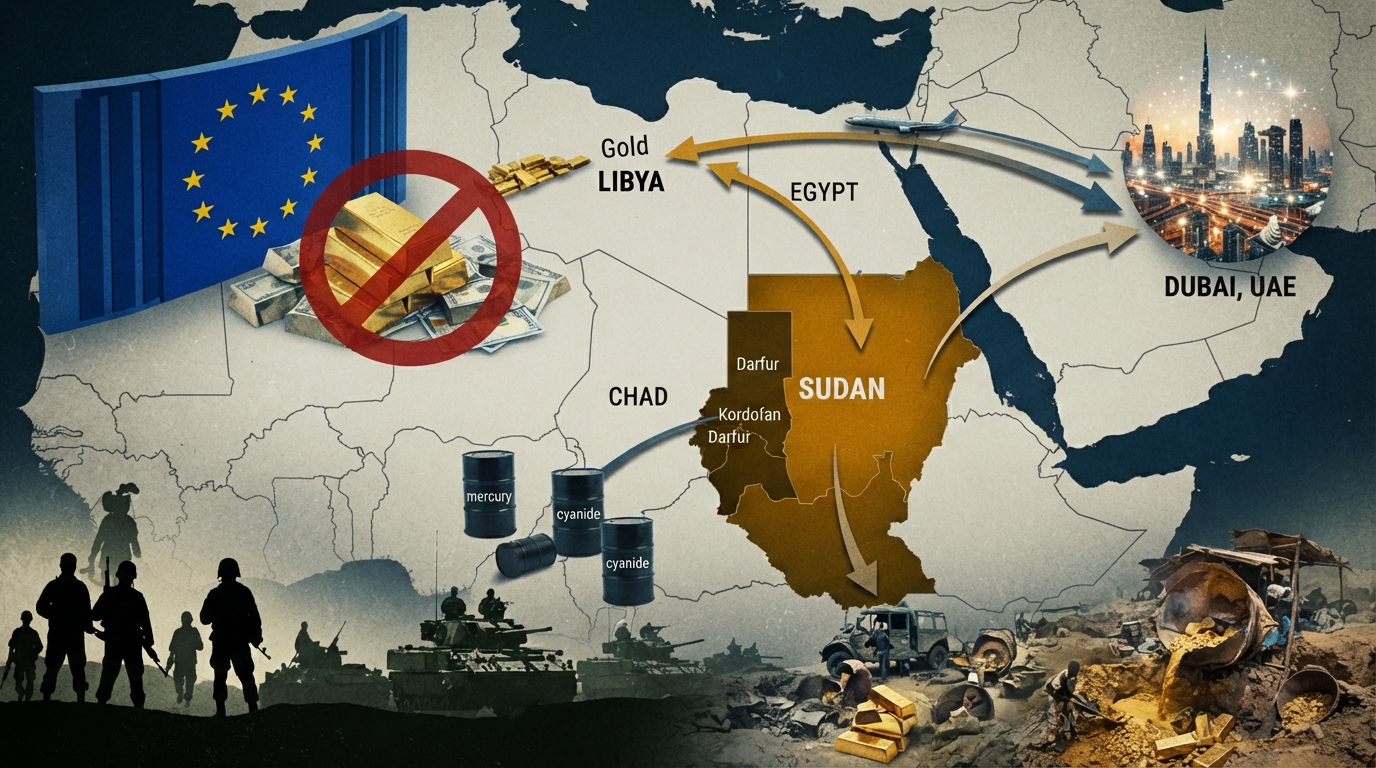
EU prohibits gold imports from Sudan to limit war financing
Sudan's extensive gold reserves have emerged as a vital revenue stream for the factions involved in the conflict.
The European Union (EU) has enacted a ban on the purchase, import, and transfer of gold from Sudan, citing that this trade has become a significant source of funding for the civil war that began in April 2023.
The clash between the national army and the paramilitary Rapid Support Forces (RSF) has led to one of the most severe humanitarian crises globally, displacing over 14 million individuals.
As one of Africa's largest gold producers, Sudan's extensive reserves have turned into an essential financial resource for both warring sides, according to human rights organizations.
EU foreign ministers have approved these measures, which also include a prohibition on the export of mercury and cyanide to Sudan, substances commonly utilized in gold mining.
The mercenaries controlling Sudan's gold trade
A straightforward overview of the situation in Sudan
UN experts and other analysts estimate that more than half, and in some cases up to 70%, of Sudan's gold is smuggled out of the nation annually.
The RSF dominates the goldfields in Darfur and Kordofan, located in the western and central regions, while the Sudanese army manages production in the northern and eastern areas.
The gold is frequently trafficked through neighboring nations, such as Egypt, Chad, and Libya, before arriving in Dubai, United Arab Emirates (UAE), a significant global center for gold refining and trade.
"Gold has become a key source of revenue sustaining the conflict in Sudan," stated the EU Council, noting that the ban and additional restrictions aim to "reduce the resources" available to those perpetuating the violence.
"The measures are intended to limit financing sources for the conflict and further increase pressure on those fueling the war," it added.
Under these restrictive measures, individuals and companies within the EU are barred from purchasing, importing, or transporting gold sourced from Sudan.
Mercury and cyanide required for humanitarian and public health purposes are exempt from the EU's export ban.
These latest restrictions broaden an existing EU sanctions framework that has already targeted individuals and entities accused of exacerbating the conflict.
However, experts caution that sanctions alone are unlikely to stop the trade unless major international gold trading centers and regional transit routes also enhance enforcement against illicit Sudanese gold.
International pressure is mounting on the supporters of this conflict to withdraw, as aid organizations estimate that over 28 million people in Sudan are experiencing acute hunger.
Are foreign powers taking advantage of Sudan?
'I witnessed bodies discarded in a mass grave in Sudan'
'Our role is solely killing' - how Sudan's brutal militia executed a massacre
'The gunfire was loud, but there was always music': Sudanese band continues to perform amid the war
For more news from the African continent, visit BBCAfrica.com.
Follow us on Twitter @BBCAfrica, on Facebook at BBC Africa, or on Instagram at bbcafrica.
Focus on Africa
This Is Africa