

Embryo transplantation and AI for farmers: Uzbekistan is boosting livestock development
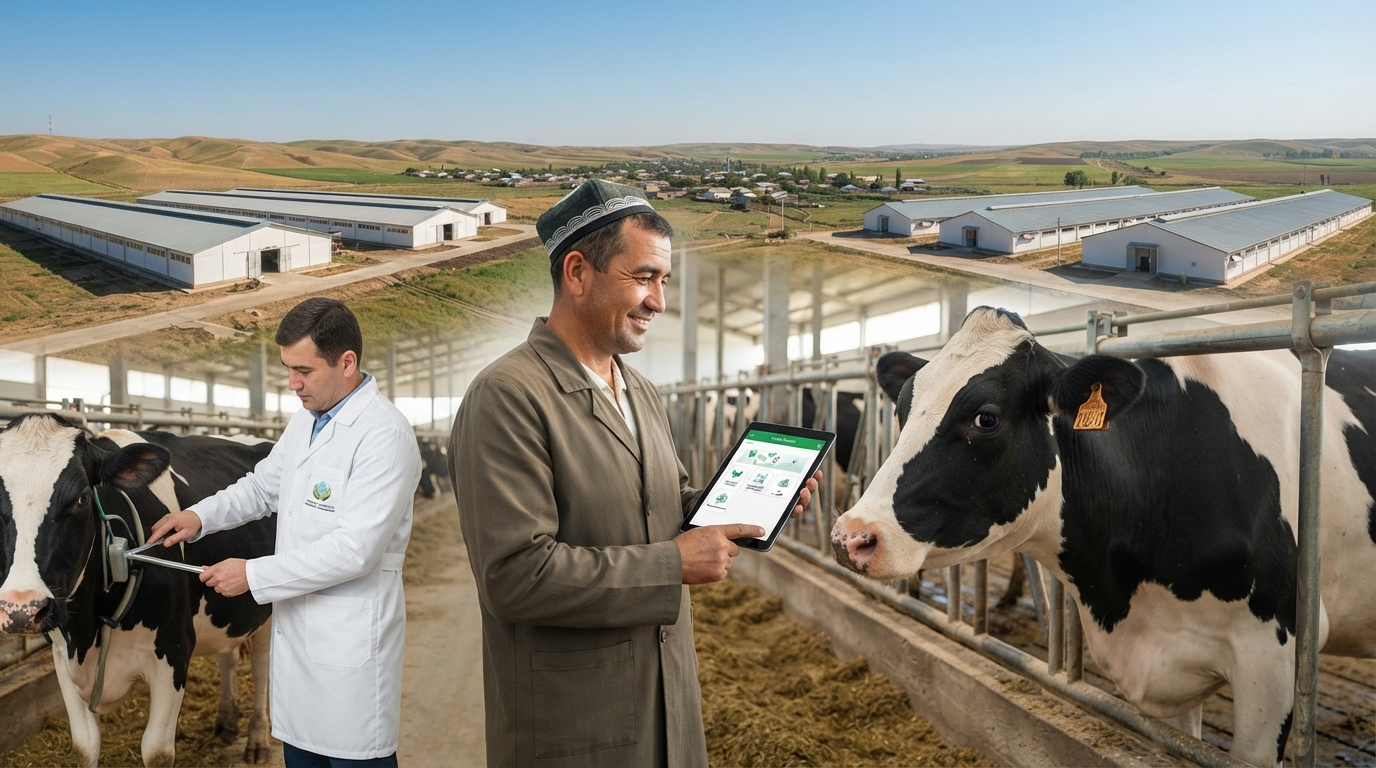
Uzbekistan is stepping up livestock development: implementing AI and embryo transfer.
President Shavkat Mirziyoyev reviewed a set of measures aimed at developing livestock and poultry farming, increasing meat and milk production, and integrating advanced technologies into the industry.
Particular attention is being paid to supporting private farms and mahallas specializing in livestock farming. Currently, 2,400 mahallas in 191 districts, home to 3.9 million people, already specialize in this area.
Residents of these districts will be provided with greater access to breeding livestock, artificial insemination will be introduced, and the quality of feed and veterinary services will be improved. Identification of breeding calves and a subsidy system will also be introduced. These measures are intended to increase livestock productivity and create additional sources of income for the population.
Specialized farms, each designed to house 200 head of cattle, will be established in 13 districts of the country. The industry plans to annually artificially inseminate 500,000 cows using high-quality material, as well as actively implement embryo transfer technologies.
A Livestock Breeders Association will be established in Uzbekistan to protect farmers' interests, develop cooperation, promote breeding, conduct research and innovation, provide financial support, and expand into international markets.
A unified digital platform, "Smart Farmer," has been developed for farmers and the public. This mobile app will allow farmers to identify livestock, call a veterinarian, receive information on artificial insemination, feeding, and pasture management, apply for subsidies, and utilize artificial intelligence recommendations.
Projects totaling $432 million will be launched in the poultry sector. By 2028, this will allow for an additional 100,000 tons of poultry meat production, increase feed output to 3.3 million tons, and expand the use of modern slaughter systems from 20% to 50%.