

Drone warnings and sheltering in airports as South Korea battles historic heatwave
The president has called the extreme heat a "national disaster" and ordered agencies to mobilise all resources.
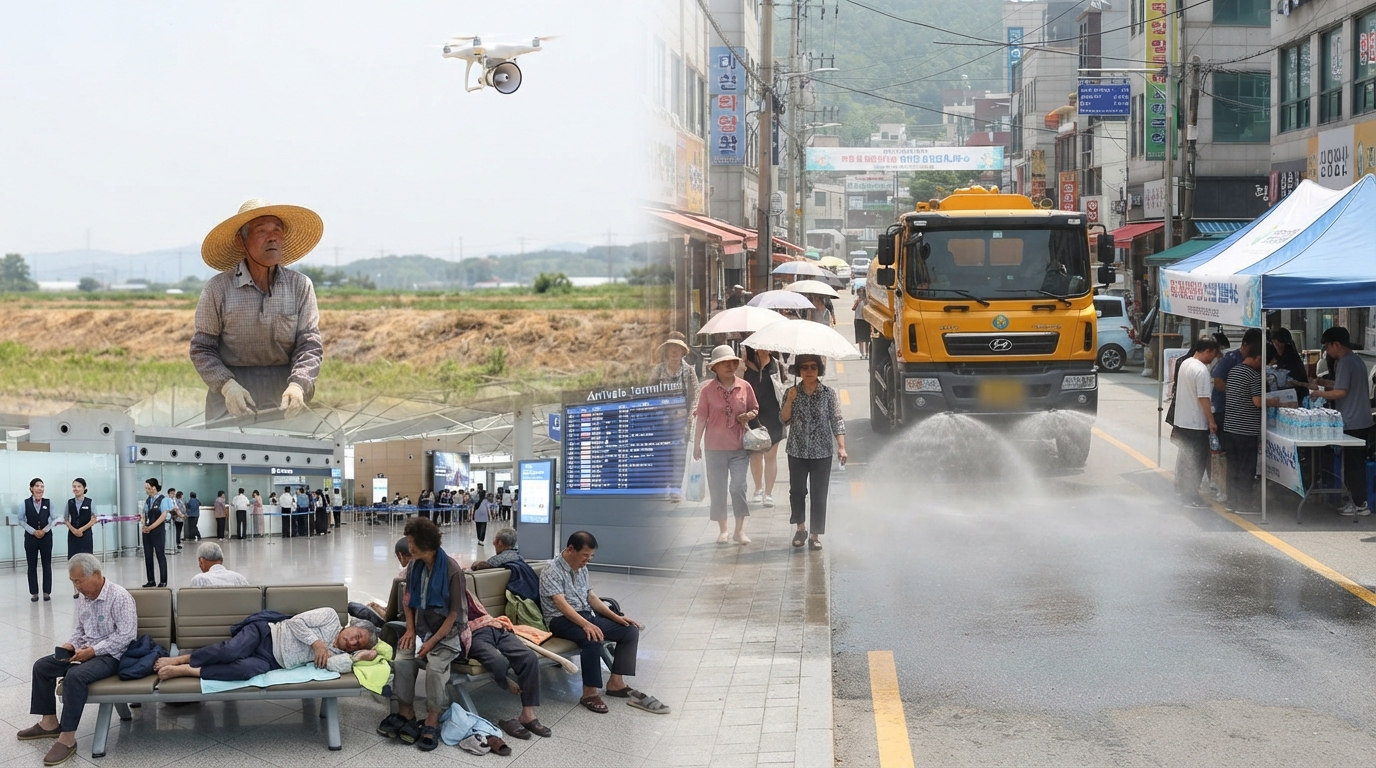
South Korea is grappling with an unprecedented heatwave, leading to drone-issued warnings for farmers and residents seeking refuge in air-conditioned airports.
President Lee Jae Myung has declared the extreme heat a "national disaster," instructing public agencies to deploy all available resources. Earlier this week, temperatures in the southern region reached a record-breaking 42.5C (108.5F).
So far this year, 21 individuals have succumbed to heat-related illnesses, and nearly 2,500 have sought emergency medical attention for heat-related conditions since mid-May.
"Heatwave conditions once confined to foreign news reports have now become our reality," Lee stated on Thursday.
To combat the heat, some local governments have dispatched trucks to parks, markets, and bus stops, offering free chilled bottled water. In Yangsan, a southern city that recorded a historic high of 42.5C on Sunday, sprinkler trucks are spraying water on sun-baked roads.
In rural areas like North Gyeongsang province, drones equipped with loudspeakers and thermal imaging cameras are being used to protect farmers, many of whom are elderly. These drones hover overhead, broadcasting messages such as "it's hot, you need to go inside" to encourage breaks and cooling down.
Following advice from the national weather agency, most outdoor activities have been canceled, including the daily changing-of-the-guard ceremony at Seoul's Gyeongbokgung Palace. The national baseball organization has also suspended all scheduled games for the week after a 23-year-old spectator collapsed at a game in Incheon on Tuesday, reportedly due to dehydration and low blood pressure caused by the heat.
Amidst the scorching temperatures, South Korea's air-conditioned airports, including the largest in Incheon, have become havens for vulnerable populations such as the homeless and the elderly. Local media photographs show people resting on benches and platforms, using towels as makeshift blankets.
A visitor sheltering at Seoul's Gimpo airport told The Korea Times it's a "perfect place to rest without spending any money." He added, "I come here from time to time with my friends whenever the weather gets too hot."
Meanwhile, a mobile application developed by an undergraduate student to guide people to the shadiest walking paths has gained popularity online, especially among students. Named Geuneulro, meaning "shaded road" in Korean, the app considers the sun's position and shadows from buildings and trees to recommend the most shaded routes through the city.
"This summer has become so hot that I feel like meat on the grill," app developer Yu Min-jun told BBC Korean. Yu created the app after struggling with his commute in the heat. "The fact that it has resonated with so many people shows that many are struggling. That makes me worry because they say it will only get hotter in the future. I hope this prompts more to pay attention to climate change," the 23-year-old said.
Climate experts anticipate a slight easing of the extreme heat starting this weekend, with daytime highs potentially dropping to around 36C, though hot weather may persist. Earlier this week, Seoul's meteorological administration predicted a 50% chance that temperatures in September and October could remain higher than average.