

Disturbing the city's peace: A look at the problem of noisy motorcycles at night
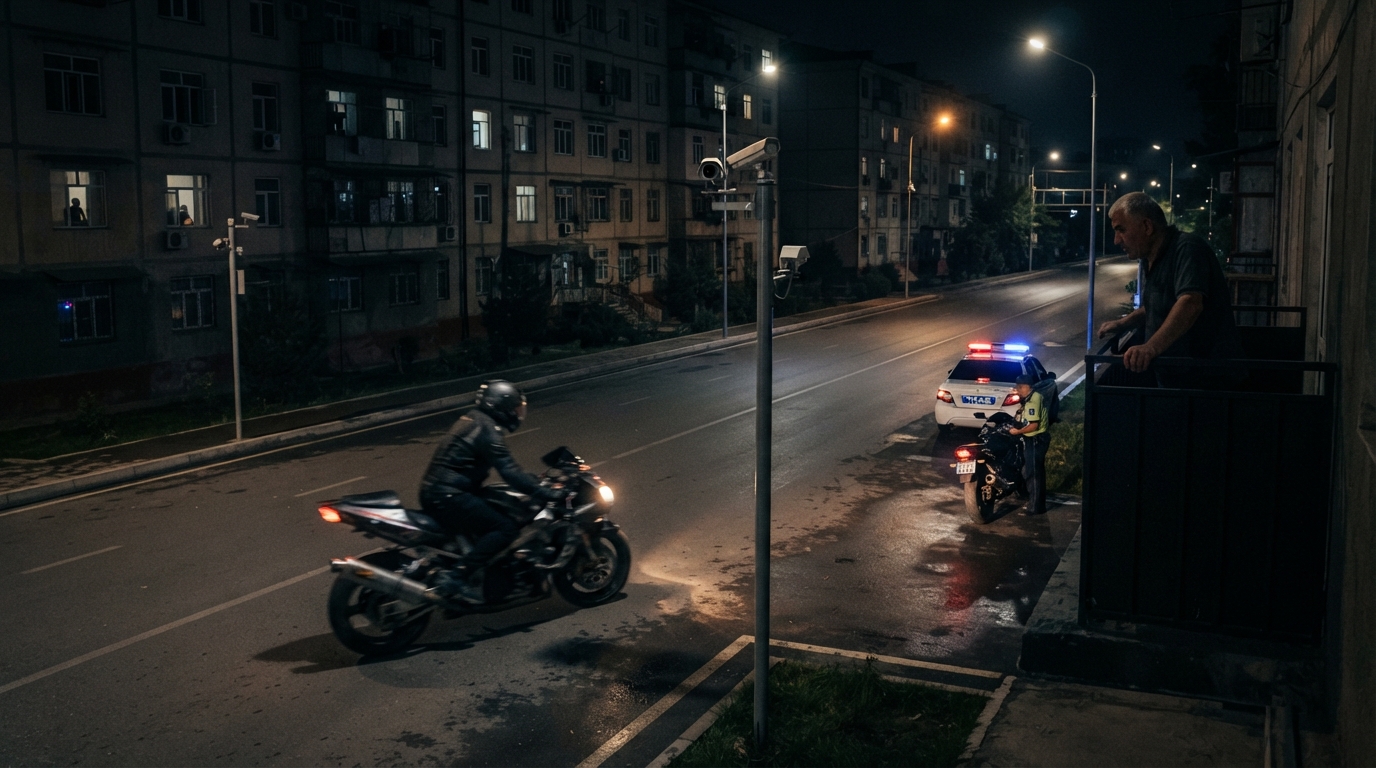
It's midnight. Hundreds of thousands of people living along Tashkent's main thoroughfares: Shota Rustaveli, Amir Temur and other streets, sleep with their windows open. At this very moment, the sound of a motorcycle roaring down the street disturbs their sleep. This is not a one-night stand, but a problem that has been going on for years. The problem has become more acute in recent years with the sharp increase in the number of electric motorcycles and scooters.
**Those who disturb the peace in the city: The problem of noisy motorcycles at night is under in-depth analysis**
Hundreds of thousands of residents living along the main streets of Tashkent - Shota Rustaveli, Amir Temur and other highways - sleep with their windows open at midnight. It is at this time that the roaring sound of motorcycles passing by disturbs their sleep. This is not a one-night phenomenon, but a problem that has been going on for years. With the sharp increase in the number of electric motorcycles and scooters in recent years, this issue has become even more urgent.
According to statistics, in 2021-2022, more than 50 thousand motorcycles were imported from abroad, while in 2023 alone this number increased by 2.5 times, reaching 127 thousand units.
So, what is the root of this problem: lack of control or low motorcycle riding culture? Kun.uz invited Kahramon Khudaiberganov, a representative of the Information Service of the Tashkent City Police Department, motorcycle champion and head of a motorcycle school, Islam Soatov, and lawyer Shohjahon Shomurodov, a lawyer at Verum Law Firm, to the studio to discuss this topic.
**How effective are night raids?**
According to the legislation, liability is established for any noise-related offense after 23:00, including listening to loud music or motorcycle noise. If necessary, citizens can contact 102, and the preventive inspector will take appropriate measures. But in practice, is the control producing the expected results?
Kahramon Khudaiberganov noted: “Our legislation provides for perfect liability for every act. From walking around to hooliganism on the street, if necessary, there is a prison sentence. There is a gap in upbringing and culture in some families, when parents abandon their children to their own devices. When we investigate such cases, most of the time, the motorcycle they are driving is not their own, but belongs to an acquaintance or relative. A person who drives a motorcycle that he himself has acquired with great difficulty and with great difficulty does not drive like that. He knows what awaits him if he breaks the rules, if he breaks the law. But as we have said, such cases do exist among young people. However, they have decreased significantly today. The entire territory of Tashkent is under control, there are cameras everywhere. If necessary, even if a traffic police officer runs away without stopping, all motorcycle drivers will be found and legal action will be taken against them.
**Is the root of the problem in legal culture?**
According to lawyer Shohjahon Shomurodov, the issue of legal awareness and legal culture lies at the root of any violation. He noted that a person violating the law may understand the consequences of his actions, but does not follow the established rules due to a lack of legal culture.
“At the root of every mistake, failure to follow the procedure established by law is legal consciousness and legal culture. Every person committing violations has legal consciousness, but lacks legal culture, that is, the culture of following the established rules has not been formed,” Shomurodov said.
He noted that Article 192 of the Code of Administrative Responsibility establishes liability for household noise in the period from 23:00 to 06:00. Also, according to Part 3 of Article 125 of the Code, there is administrative liability for re-equipping vehicles, including motorcycles, without the appropriate permit. In this regard, a new draft law aimed at protecting the population from the negative impact of noise has also been approved by the Senate.
**Is there a special place for racing?**
Interestingly, it is said that there is a place where it is officially possible to hold a race.
“There is a special place in the Piskent district of the Tashkent region for such a race. With the appropriate permit, you can participate in the race there,” says Kahramon Khudaiberganov.
However, the head of the motorcycle school, Islam Soatov, does not agree with this answer. According to him, it takes months to get that permit.
“There is one thing: if two kids fight on the street, they say, “Show all your strength in the ring.” If we have two racers racing on motorcycles, we cannot say, “Show all your strength on the track.” Because, firstly, the Piskent autopolygon does not meet the standards. Even if it does, it takes months to get there and get a permit. We recently wanted to race there in August, and I wrote an official letter to the Ministry of Internal Affairs. I've been trying since June, more than two months... What I'm saying is that if the state organizes a special place where you can race, then we can bring those who are racing on the street and say, "There is a place that the state built for you, go race there," - says Soatov.
**The "silencer" issue**
Illegal re-equipment, called "straight-through", is often criticized on social networks. But Islam Soatov says that the problem is not only in the re-equipment, the motorcycle itself is inherently loud.
"The length of the motorcycle is two meters... due to the engine being in the middle, the muffler is about one meter... The sound of a motorcycle that comes from the factory is also louder than that of a car," - he says.
He also notes that there is a disagreement with the employees of the State Traffic Safety Administration over the measurement method. Although the engine speed for decibel measurement should not exceed 3,000 rpm, this rule is not always followed in practice.
In addition, the fact that a so-called "slider" (a part that protects the leg in the event of a fall) that protects motorcyclists is sometimes mistakenly fined as "unauthorized retrofitting" was also cited as an example of the unclear application of the law in practice.