

Did Hampshire club shape Brazil's football magic?
Radio Solent's Tom Murray explores the link between Southampton and the father of football in Brazil.
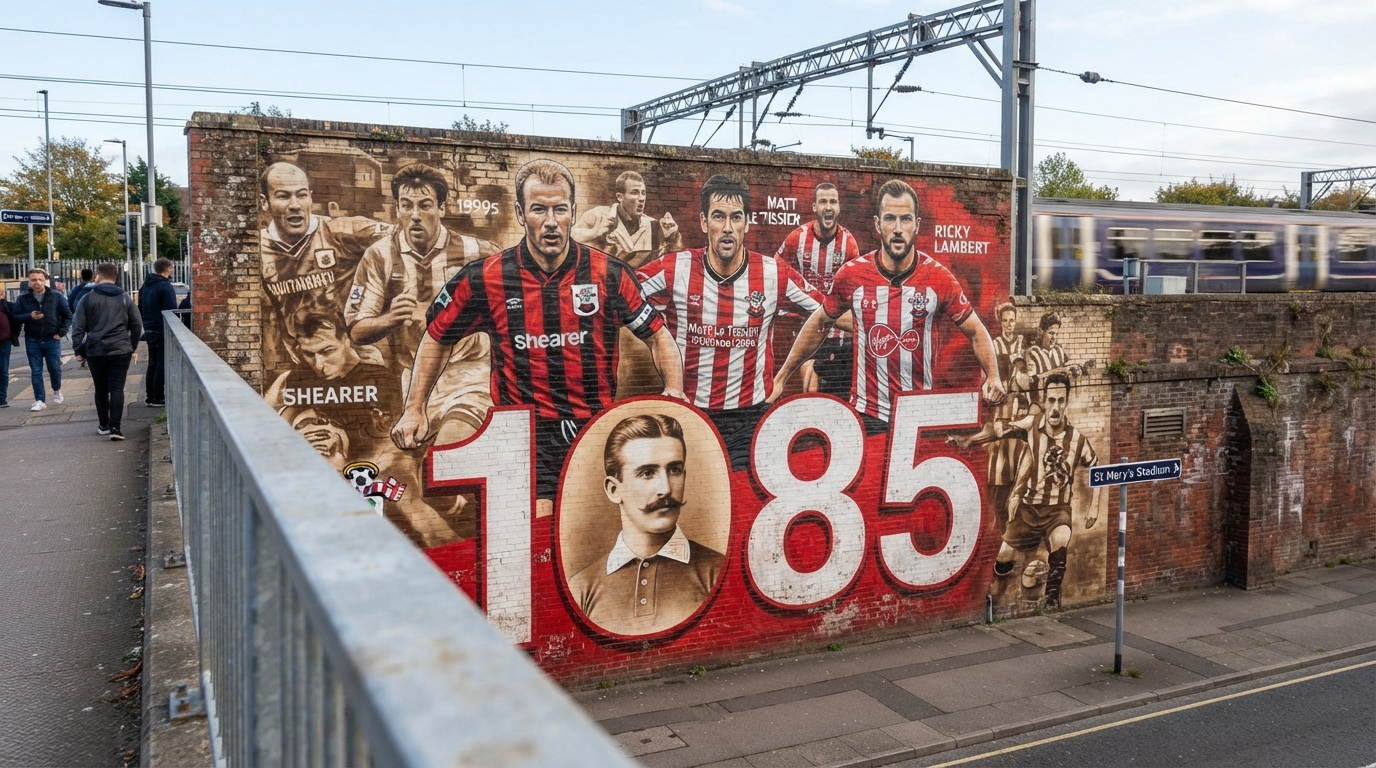
The legendary connection between Brazil and football, characterized by flair, passion, and five FIFA World Cup titles, along with iconic players like Pelé and Ronaldo, might have surprising roots in Hampshire. For fans of Southampton and Bournemouth, names like Leo Cienza, Evan Ilsen, and Haiyan also come to mind.
Tom Murray of Radio Solent investigated this link at St Mary's Stadium in Southampton for the "Secret Hampshire" series.
A mural adorning a railway footbridge near the stadium features famous Southampton players such as Alan Shearer, Matt Le Tissier, and Ricky Lambert. However, nestled within a red-painted "1885," marking the club's founding year, is a black and white image of a man with a distinctive mustache: Charles Miller, widely recognized as the "father of football in Brazil."
Andy Skinner, who has worked at Southampton museums for over a decade, described Miller's story as "quite an amazing story." Miller was born in Sao Paulo to British parents who, like many expatriates of the era, sent him to England for his education. He arrived in Southampton by ship and attended a boarding school.
Skinner noted that Miller's education was "pretty sports heavy." During his time in Southampton, he was introduced to football and played for St Mary's (which later became Southampton FC) and another team called Corinthians. Miller was "really impressed" not only by the game itself but also by "the way in which these teams that he's encountering play it."
According to Duncan Holley, a historian at Southampton FC, Miller spent approximately 10 years in Southampton before making a move that would permanently shape Brazilian football. At 19, Miller returned to Brazil, bringing with him "some footballs, a rule book, some Saints shirts and sort of officially introduced football to Brazil."
Holley emphasized the importance of the rule book, as "not many people in Brazil would have known the rules of association football as they were then." Coming from a well-to-do family, Miller quickly set up teams and leagues in Sao Paulo, gathering boys and men from the streets.
In 1904, a decade after Miller's return, Southampton became the first English side to tour Argentina. Holley recounted that Miller traveled to Rio to meet the boat as it docked on its way to Argentina, seeing it as an opportunity to promote football in Brazil. He attempted to arrange a game in Brazil, but Southampton was already committed to Argentina, meaning it would be another 44 years before the club toured Brazil in 1948.
Miller's legacy is celebrated in Sao Paulo's football museum, located in Charles Miller Square, which honors the history, culture, and legends of Brazilian football. Marcel Tonini, a researcher at the museum, believes that while others may have also introduced the game to Brazil, Miller's prominence stems from his high social standing. "He was a member of the high-level class in Brazil," Tonini explained, adding that upon his return from studies in the UK, Miller understood the need to bring the "official association of football" and "spread the modernity to the high-level society here."
Although Miller's story may not be widely known in his adopted city of Southampton today, Holley confirmed that Southampton FC has not forgotten him. "Thankfully, the club are responsible for that mural on the wall and they've appreciated it for quite some time now that they've actually got a connection with football and Brazil from the early days."