

China detains US scientist who studied North Korea nuclear tests
Chen Youlin's family says he has been wrongfully detained for nearly two years on spying charges.
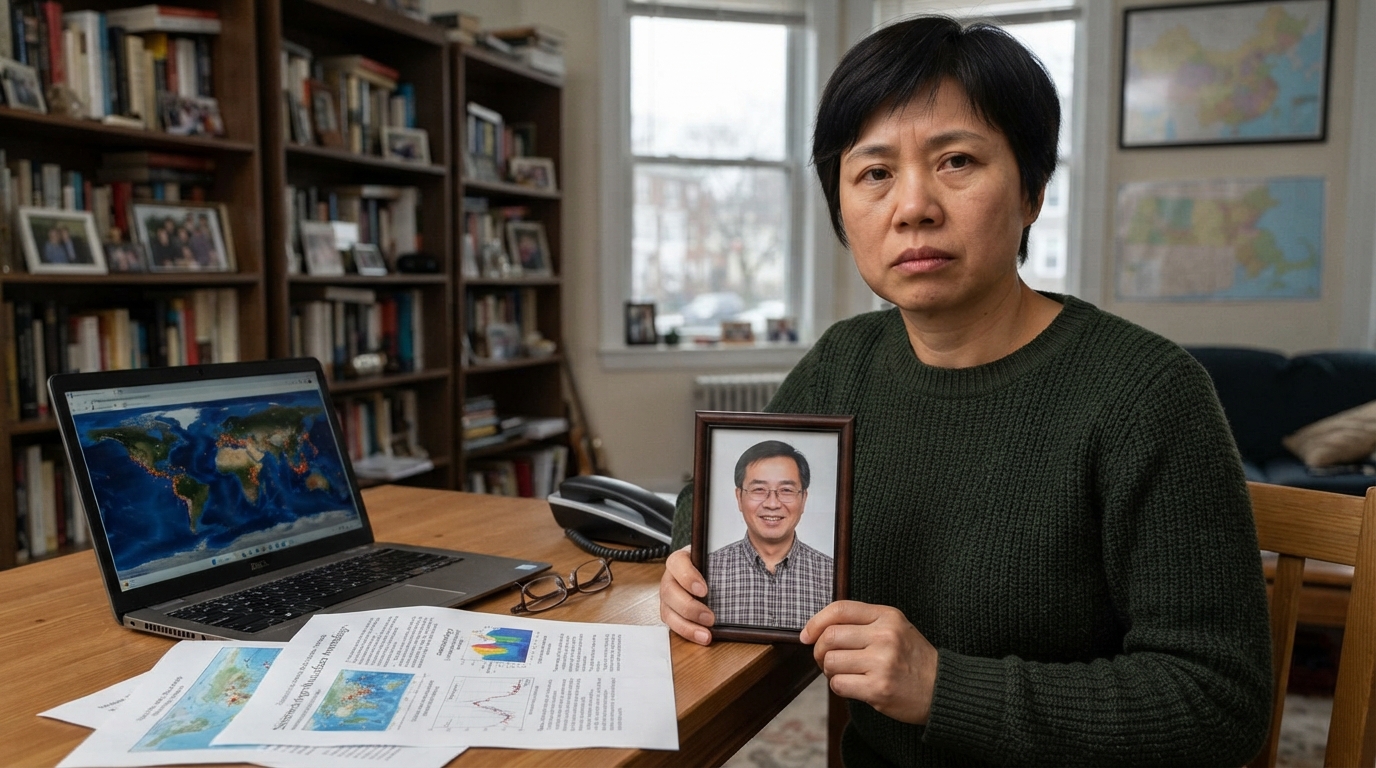
China has apprehended a US seismologist who has been monitoring nuclear tests for nearly two years on charges of espionage, according to his family. Chen Youlin, 54, was taken into custody in November 2024 while visiting family in Beijing, as reported by the hostage advocacy organization Global Reach. The family chose to speak out after observing no indications that Beijing would release Chen.
His wife, Rong Yufang, who is also a seismologist, stated that Chen collaborated closely with Chinese colleagues, asserting that the allegations against him are "both wrong and inconsistent with the public and collaborative nature of the work that he has done." His research primarily focuses on North Korea, a close ally of China that has faced long-standing sanctions due to its nuclear weapons program and underground tests.
It remains uncertain whether Chen's work has any connection to Beijing's nuclear program. US intelligence indicates that China is developing a new arsenal and has conducted secret tests, which the Chinese government denies. When questioned about the case during a daily press briefing on Tuesday, a spokesperson for China's foreign ministry, Lin Jian, stated that the country's "judicial authorities handle cases in accordance with the law," adding, "There is no such thing as so-called wrongful detention." In China, espionage convictions can result in life imprisonment or even the death penalty.
Currently, Chen is the only US citizen classified as "wrongfully detained." Rong expressed her concerns, stating, "I have not been able to speak with my husband for over 600 days and am concerned for his health and well-being," in a statement released through Global Reach. In an interview with Reuters, she revealed that Chinese authorities had interrogated her husband more than 100 times regarding his work and that he was not permitted to consult a lawyer for the first 13 months of his detention.
Originally from China, Chen became a US citizen in 2011 and resides in Boston, Massachusetts. He specializes in utilizing seismological data to detect nuclear tests and has undertaken several projects funded by the US government. Rong emphasized that his collaborations with Chinese colleagues were always conducted "transparently." She added, "He is doing precisely the kind of people-to-people engagement that the Chinese government says it wants."
Chen's research included a study in December 2020 that analyzed seismic data from across Asia, including China, to enhance methods for monitoring nuclear tests and estimating their yield. Global Reach noted that there are "suspicions within the US government that Chen's arrest was spurred by China's conduct of nuclear tests in violation of the Comprehensive Nuclear Test Ban Treaty." The organization stated that Chen's expertise would provide China with an opportunity to learn about US seismic detection methodologies, enabling them to develop countermeasures to bypass the treaty.
The treaty aims to prohibit all nuclear explosion tests globally, but several "nuclear-capable" nations, including the US and China, have yet to ratify it, although both have established voluntary moratoriums on explosive nuclear testing. In June 2020, during Donald Trump's presidency, his administration accused China of conducting a covert underground nuclear test at the Lop Nur facility in the northwest of the country, a claim that China dismissed as unfounded and politically motivated.
The Foley Foundation, another US-based hostage advocacy group, expressed concern for Chen's health, highlighting that he suffers from diabetes, high blood pressure, and high cholesterol. "He needs reliable access to treatment and care that is not available while he is unjustly incarcerated," the group stated.
US Senator Edward Markey, a Democrat from Massachusetts, remarked that Beijing's "treatment of Chen has undermined [its] partnership [with the US] and may deter other academics from engaging with their colleagues in China." He added, "It is my hope that increased attention on his unjust detention will force the Chinese government to do the right thing and release Chen," in a statement released on Tuesday.
Details regarding Chen's detention emerged a month after China confirmed the arrest of another US scholar, Min Zin, who is the director of a Myanmar-focused think tank. Beijing has accused Min Zin of espionage and jeopardizing Chinese national security.