

Apple issues new challenge against UK order for access to private user data
It is the latest development in the ongoing dispute between Apple and the Home Office over data privacy.
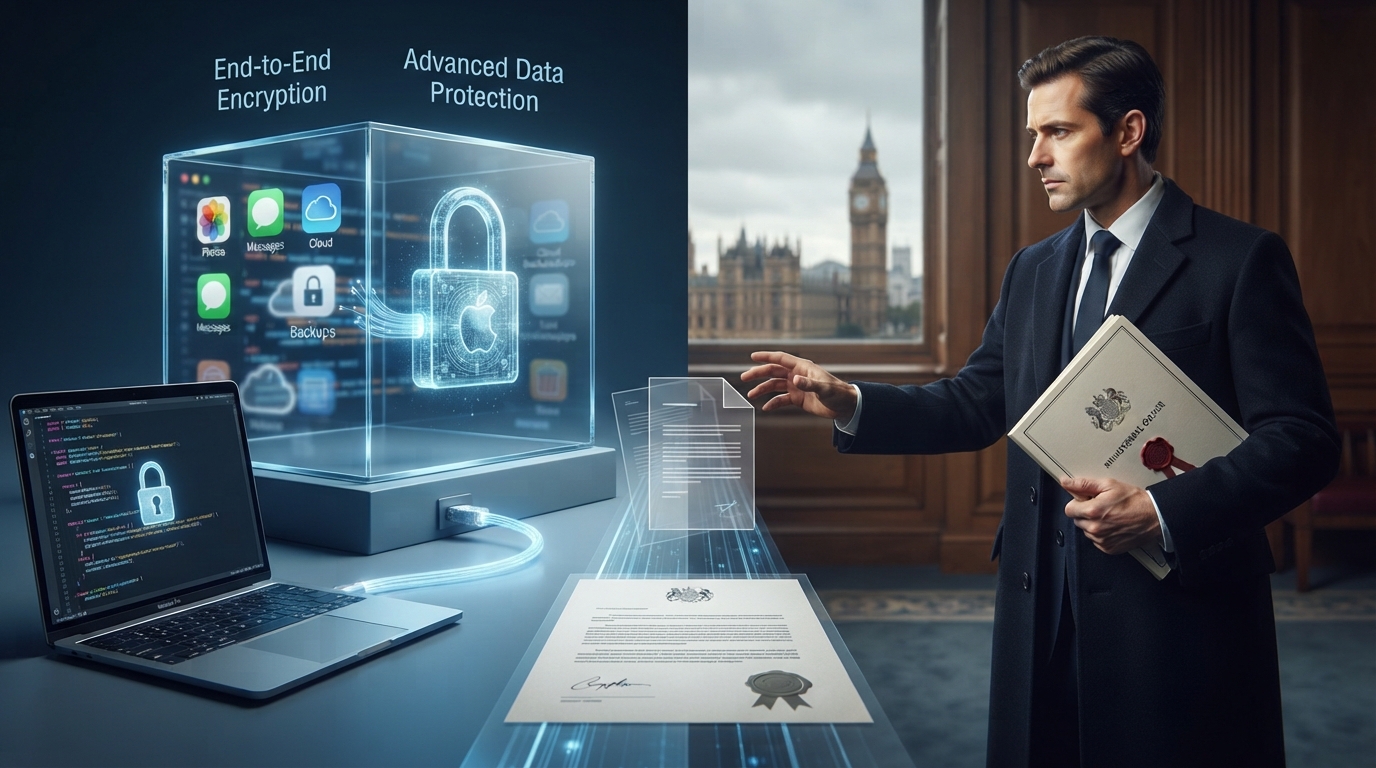
Apple has initiated a fresh legal challenge against the UK government, filing a complaint with the court responsible for addressing objections to the deployment of covert surveillance capabilities.
While the tech giant has not disclosed the specific nature of its complaint to BBC News, the *Financial Times* has reported that it represents another objection to a Home Office directive demanding "backdoor" access to highly encrypted Apple user data.
This dispute, which revolves around the government's desire to access material safeguarded by an advanced data protection system—a system even Apple itself currently cannot access—has been ongoing since early 2025.
The government declined to comment on ongoing legal proceedings or what it termed "operational matters." However, it issued a statement asserting: "The UK supports strong encryption and robust privacy protections, but it is also vital that law enforcement can access communications when necessary and proportionate to protect the public from terrorism, serious crime, and child sexual abuse."
Apple, in response, directed reporters to a statement issued last year following its initial challenge to the UK government's request. In that statement, the company expressed its "grave disappointment" that it was still unable to offer its Advanced Data Protection feature to new UK users, a decision that followed its withdrawal in February 2025.
The company reiterated, "As we have said many times before, we have never built a backdoor or master key to any of our products or services and we never will."
Since last February, iPhone users in the UK have encountered a notification on the Advanced Data Protection settings page indicating that the feature cannot be activated.
Advanced Data Protection is an optional feature that enables users to activate a heightened level of security for data stored in iCloud, encompassing backups, Drive storage, photos, and voice memos. This data is secured using end-to-end encryption, meaning even Apple would be unable to view its contents.
The government's requests for Apple to grant access to data protected by this system were issued under the Investigatory Powers Act (IPA). This act includes provisions allowing the government to issue secret notices, known as technical capability notices, which can covertly compel companies to provide UK security services with methods to access customer data.
The government had previously attempted, unsuccessfully, to keep legal challenges to its initial notice to Apple confidential. That notice was subsequently withdrawn after provoking anger among US politicians, who were concerned about its potential impact on their own citizens' data. However, the government issued a new request in October that specifically excluded US users.
Privacy advocacy groups, which had previously campaigned against the government's secret orders, welcomed Apple's new legal complaint.
"We are happy to learn that Apple is once again challenging the UK's regime of secret orders," stated Privacy International. "While we don't know the substance of Apple's claim, if it relates to the previously reported orders aimed at undermining the security of Apple's iCloud storage, then Apple's claim, alongside side ours and Liberty's, is crucially important to preserving all of our privacy and security."
Ruth Ehrlich, director of external relations at Liberty, described the case as "hugely important" with "far-reaching implications for the public's privacy rights well into the future."
She emphasized, "End-to-end encryption is an essential security tool that protects our personal data, including our bank details, health information, private conversations and images. Opening a backdoor to all of that information carries a wide range of risks to our personal data. It is critical that the Government listens to the many concerns and commits to protecting our privacy rights."
Conversely, Sir Brian Leveson, the Investigatory Powers Commissioner, who provides independent oversight of surveillance power usage, has previously criticized media use of the term "backdoor."
He clarified that notices such as those involved in this case would only be issued "if the Secretary of State deems it necessary and proportionate, and this decision is independently reviewed and approved by a Judicial Commissioner." He added that requests for data would also necessitate separate authorization under the IPA, and these would be subject to independent oversight.