

Alleged rebel leader killed in Colombia as president targets armed groups
The military operation against Hernando Forero Mosquera was carried out just days after as Colombia's new president was sworn in.
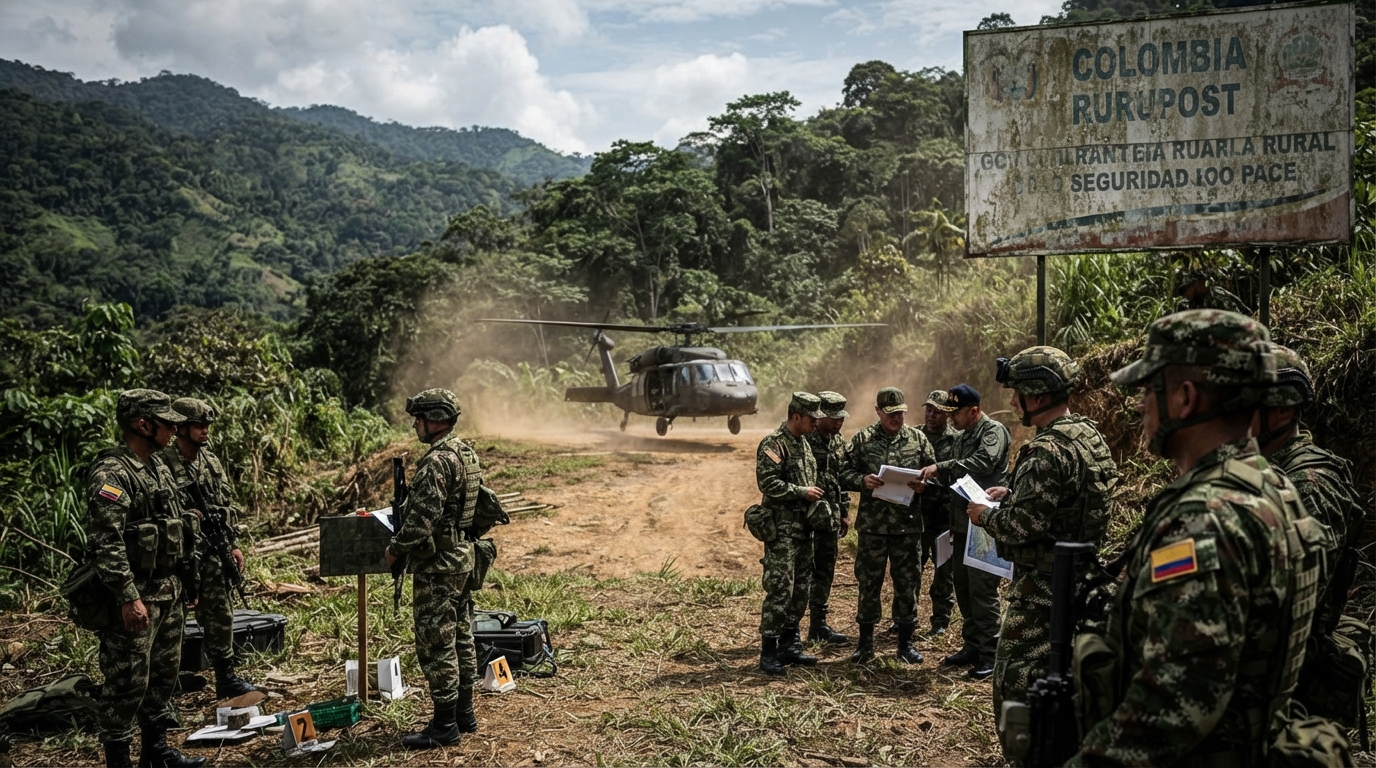
A military operation in central Colombia has resulted in the death of a man suspected of leading a breakaway faction of a left-wing rebel group, according to officials. The individual, identified as Hernando Forero Mosquera, also known as "El ruso," was allegedly at the helm of a dissident rebel group.
This operation is part of a broader initiative to suppress illegal armed groups, a directive issued by Colombia's new president, Abelardo de la Espriella, who assumed office on Friday. President de la Espriella stated that the killing of Forero Mosquera and five other alleged members of armed groups over the weekend by security forces conveyed "a clear and powerful message to all bandits that there is nowhere for them to hide."
During his presidential campaign, de la Espriella pledged to relentlessly combat "narco-terrorism," including through the use of air strikes.
Military intelligence sources indicate that Forero led a group known as Frente 28, one of numerous splinter factions that emerged from the Revolutionary Armed Forces of Colombia (Farc). The Farc, once Colombia's largest left-wing rebel group, signed a peace accord with the government in 2016. However, some members rejected the terms and refused to disarm.
These dissident groups, now primarily engaged in cocaine trafficking and illegal mining, are considered major contributors to the resurgence of violence in the country.
De la Espriella has articulated a significantly different strategy for tackling criminal organizations compared to his predecessor, Gustavo Petro. Petro, Colombia's first left-wing president, advocated a "total peace" approach that prioritized negotiation over direct confrontation. However, his attempts to negotiate with various armed groups faltered as these illegal organizations repeatedly violated ceasefires and withdrew from discussions.
De la Espriella's more aggressive stance has been met with resistance from dissident rebel groups. On Saturday, just one day after his inauguration, two explosive devices detonated. A car bomb exploded at a tollbooth in Cauca province, injuring two security guards, while in Cesar province, a police officer was killed by explosives dropped from a drone.
In a social media video, de la Espriella commended the military for eliminating Forero, whom he described as an explosives expert. He also confirmed that three additional alleged members of the dissident group were killed in the military operation in a rural area of Meta province. The president further announced that soldiers had killed two alleged members of another criminal organization, the Gulf Clan, in a separate offensive in Antioquia province.
President de la Espriella has the support of US President Donald Trump, who endorsed his candidacy. On Friday, the US State Department announced its intention to provide $1 billion (£740 million) in security assistance to de la Espriella's administration. Colombia was also welcomed into the US-led "Shield of the Americas" initiative, an alliance of Western Hemisphere nations committed to collaborating in the fight against drug trafficking gangs and transnational crime.