

Abbot's bone returned 70 years after being stolen
The kneecap was stolen by a schoolboy while on a trip to Glastonbury Abbey in 1956.
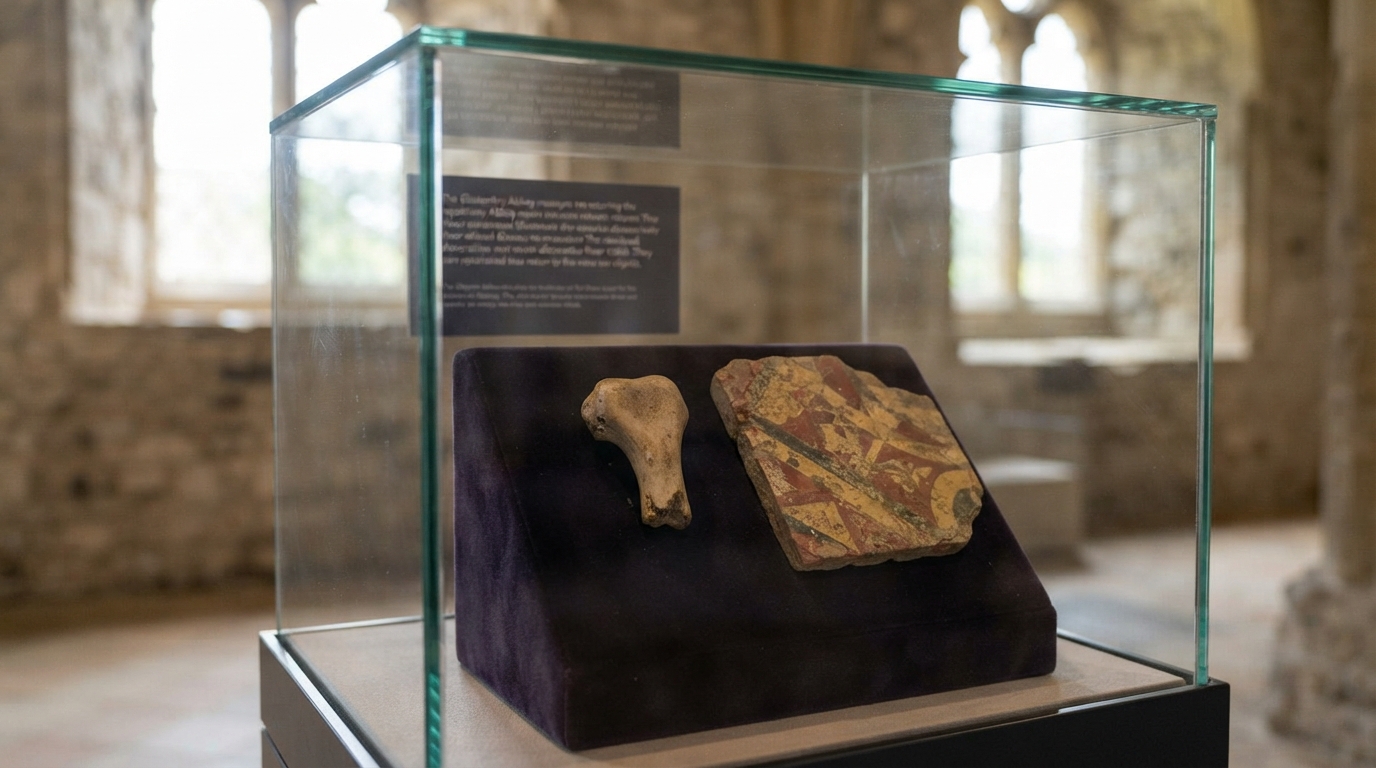
An abbot's kneecap, pilfered by an 11-year-old schoolboy over 70 years ago during a school excursion to Glastonbury Abbey, has been repatriated to Somerset.
In 1956, young George Box, then just 11, slipped past barriers at an archaeological dig at the abbey and "helped himself" to a bone from an exposed tomb. This summer, following his death in 2025, his widow brought the unusual memento, which had been displayed for decades in a glass cabinet at their Australian home, back to Glastonbury.
Lucy Newman of the abbey stated that the specific abbot to whom the bone belonged is unknown. She noted that excavating to return it to its original owner might result in "giving another abbot three kneecaps."
The 17th-century abbey, a designated monument, is historically linked by medieval legend to Joseph of Arimathea, who, according to the New Testament, buried Jesus Christ, and is also believed to be the burial site of King Arthur.
Newman recounted receiving "quite a surprise" in their general inquiries inbox late last year. "We get all sorts of weird and wonderful requests via that [email] but this was quite a standout one," she remarked. George's widow contacted them to arrange spreading his ashes in the area where he grew up, around Brent Knoll. She also intended to return the kneecap her "scallywag" husband had "helped himself to."
Newman described the news as "quite a surprise," but the date provided by the widow coincided with a major archaeological excavation at the site, during which several abbots' tombs had been opened. She believes the young schoolboy must have discreetly reached into an open tomb when unobserved, taking not only the bone but also a fragment of medieval floor tile. "Both things are very easy to pick up and put in a pair of schoolboy shorts," she explained, adding that "as a child he never told anyone what he had done."
In 1970, George immigrated to Australia, where the abbot's kneecap and tile were prominently displayed in a small glass cabinet in his hallway. He only confessed to his wife "about exactly how he'd come by them" later in life, eventually agreeing that both artifacts should be returned. "He didn't want it to happen until he'd passed away – I think maybe [it was] embarrassment," Newman speculated. George even constructed a special box for the artifacts' return journey to the abbey.
Although the kneecap's original owner remains unidentified, abbey staff have narrowed down the possibilities to three candidates who died between 1250 and 1290. However, Newman noted that the only way to definitively identify the owner would be by "exhuming them all and seeing how many knee bones they all have." She added, "The photographs we've got of the [excavated] tombs – we don't know whether they were taken before or after a schoolboy climbed in and helped himself to a bone." Furthermore, an excavation "could disturb more archaeology than would benefit from an abbot being reunited with his kneecap."
While the abbey does not condone the removal of archaeological items by mischievous schoolboys, Newman stated that "given the amount of time that has gone by," there is "a bit of an amnesty." She also found it "quite nice that the knee bone has been all the way to a country that 13th Century abbots had absolutely no idea existed." She concluded, "Lots of our abbots travelled extensively in Europe, they would go to Rome and places like that, but he's certainly now the most travelled."
The abbot's kneecap and tile fragment are currently on display in the abbey's museum.