

A new system of state tariff regulation in the energy sector has been introduced in Uzbekistan
A new system of state tariff regulation in the energy sector has been introduced in Uzbekistan. The press service of the Ministry of Economy and Finance reported this.
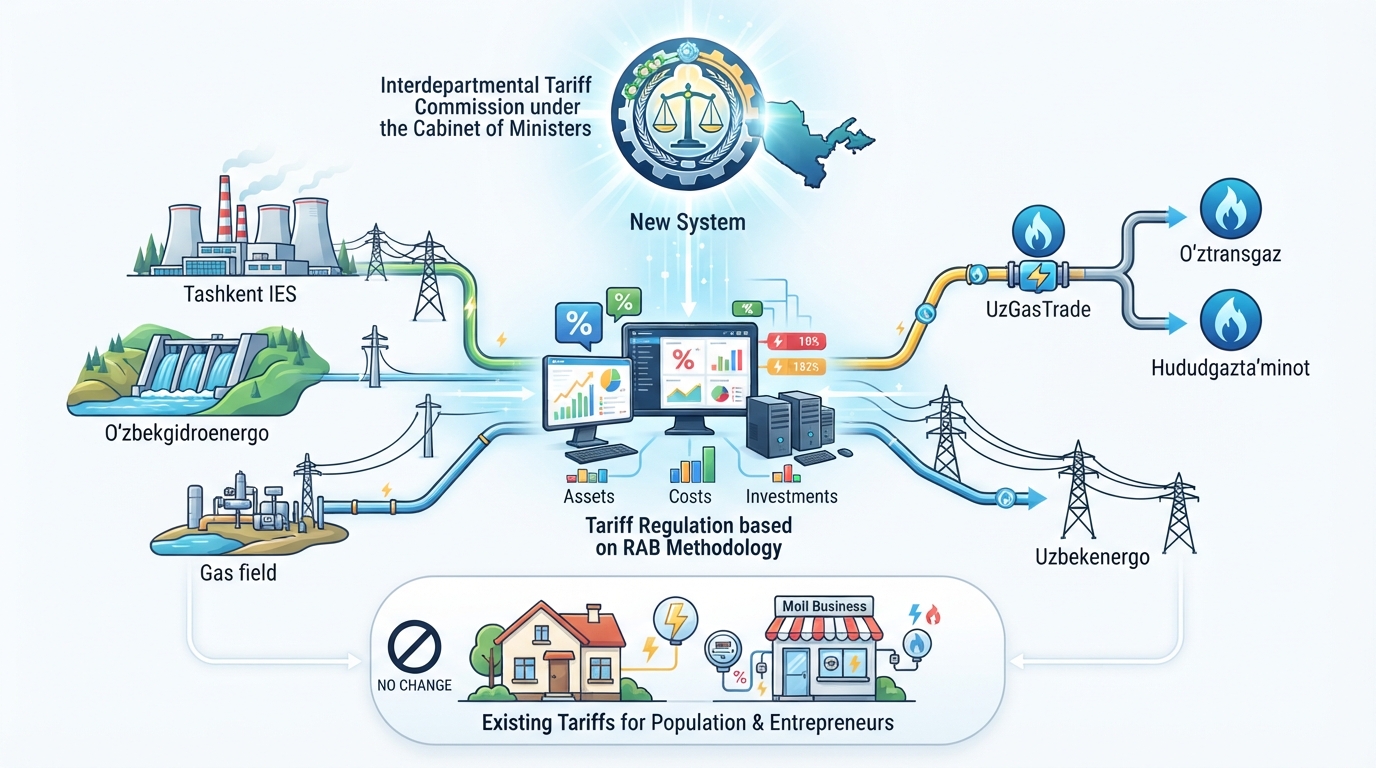
According to the new regulation, regulated tariffs for the production, transmission, distribution and supply of electricity, as well as for natural gas transportation and gas supply services, have been approved. These tariffs are set by the Interdepartmental Tariff Commission under the Cabinet of Ministers and will be used in settlements between regulated organizations in the energy sector from August 1, 2026.
**What are the new tariffs?**
The tariffs that will come into effect from August 1, 2026 are as follows:
* Electricity generation - 8 percent;
* Electricity transmission - 18 percent;
* Electricity distribution - 4 percent;
* Natural gas distribution - 28 percent.
The previously announced tariffs set 9 percent for electricity generation, 30 percent for transmission, 10 percent for distribution, and 23 percent for natural gas distribution. According to the ministry, the differences in some approved tariffs from the previously announced parameters are due to the gradual transition to a new system of state tariff regulation and coordination of subsequent changes with the state budget cycle.
The decision of the Interdepartmental Tariff Commission established the following prices, including VAT:
* From “UzGasTrade” to “Hududgazta’minot” – 1.39 million soums per 1 thousand cubic meters;
* From “UzGasTrade” to “Uztransgaz” – 1.6 million soums;
* Transportation service of “Uztransgaz” – 195 thousand soums;
* Transportation service of “Hududgazta’minot” – 240 thousand soums.
The tariffs for electricity generation are also clearly indicated. For example, for 1 kWh:
* “Heat power plants” – 834 soums;
* “Talimarjon TPP” – 579 soums;
* “Angren TPP” – 947 soums;
* “Yangi-Angren TPP” – 828 soums;
* “Tashkent TPP” – 1,126 soums;
* “Uzbekgidroenergo” – 522 soums.
**Current tariffs for the population and entrepreneurs will not change**
An important point is that the new tariffs do not change the current electricity and natural gas tariffs for the population, business entities and other end consumers. That is, the new rates approved by the Interdepartmental Tariff Commission will be used for mutual settlements between regulated organizations in the energy sector.
**Tariffs will be formed based on the RAB methodology**
One of the important aspects of the new system is the gradual transition to the formation of tariffs based on the Regulatory Asset Base (RAB) methodology. This methodology provides for the formation of regulated tariffs based on the value of regulated assets of enterprises, economically justified operating costs and investments. However, this procedure does not mean that all costs and investments submitted by energy organizations will be automatically included in the tariff. Final decisions on the approval of tariffs will be made by the Interdepartmental Tariff Commission in accordance with the procedure established by law.
**Tariffs will be reviewed in the first half of 2027**
It is planned to review the tariffs approved under the new system in the first half of 2027. According to the Ministry, the new system will serve to ensure the financial stability of energy enterprises, modernize energy infrastructure, improve the reliability of energy supply and the quality of services. The state will also retain its powers to regulate energy tariffs and the activities of natural monopoly entities in accordance with current legislation.
The new methodology was developed taking into account international best practices, recommendations from international financial institutions, and the specifics of the energy sector in Uzbekistan. According to the ministry, the new system will create conditions for increasing the transparency of the tariff formation process, attracting long-term investments, modernizing energy infrastructure, and increasing the reliability of energy supply.