

5 diseases you can get from swimming in a pool
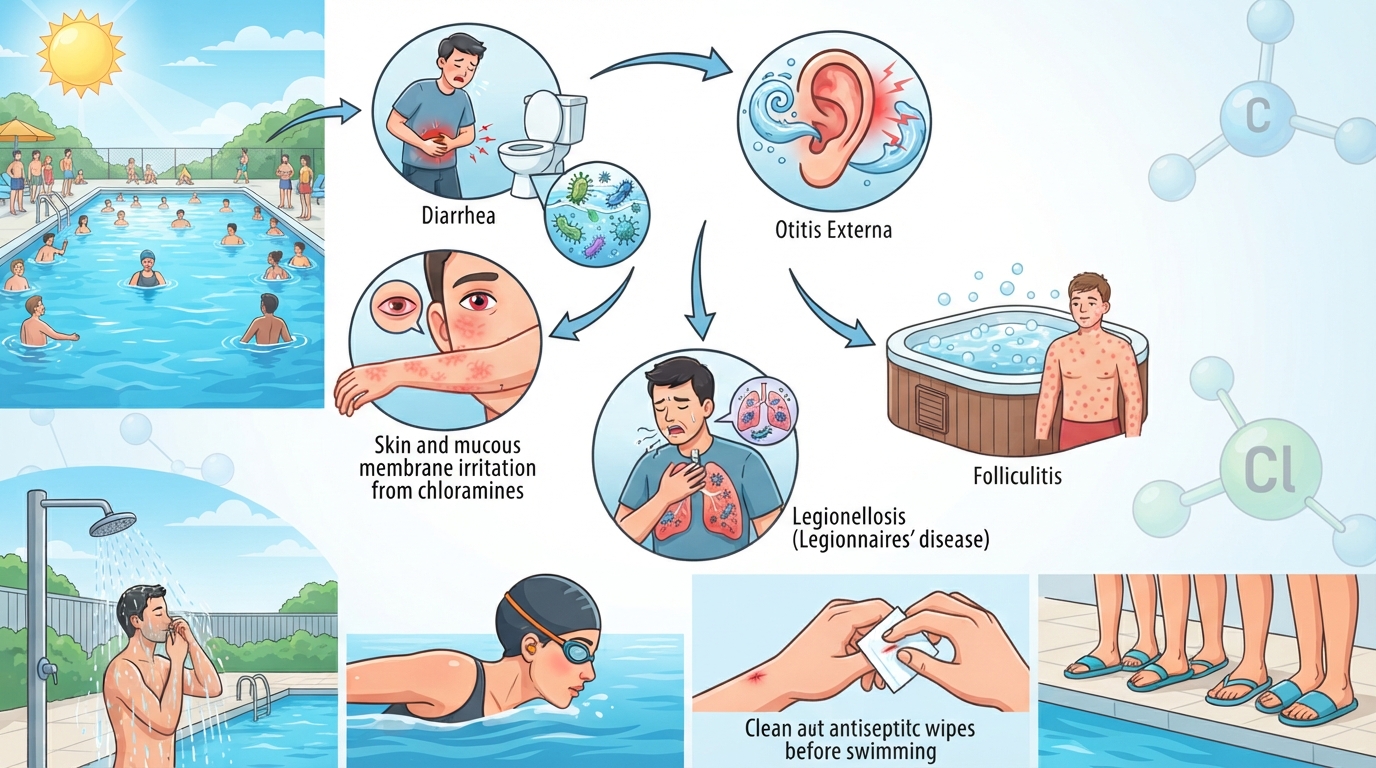
During the hot summer days, the number of visitors to swimming pools and swimming pools increases. However, the higher the air temperature and the number of people in the pool, the higher the risk of contracting various diseases. Various bacteria and infections on human skin can be transmitted to others through hot air and water.
Although the automatic chlorination system and disinfectants in swimming pools effectively fight bacteria, some viruses are resistant to chlorine and are difficult to fight. Below we will consider 5 different diseases that can be contracted while swimming in a pool.
**Diarrhea**
Diarrhea, popularly known as "stomach ache" or "diarrhea", is a functional disorder of the intestinal tract, characterized by frequent and watery diarrhea. This disease occurs in both adults and children. If a person with diarrhea cannot control himself in the pool, millions of microbes can instantly enter the water and spread to others.
Unfortunately, there are also people who do not follow the rules of hygiene. After the diarrhea attack is over, those who use only toilet paper instead of washing themselves, harmful bacteria remain. In this case, even in small quantities, microbes get into the water.
**Ear canal infection (otitis externa)**
Otitis externa is an inflammation of the external ear canal, which develops directly in the auditory canal. This disease occurs as a result of improper cleaning of the ears or bathing in unclean pools.
In fact, the natural secretion inside the ear - earwax - acts as a protection. However, the chlorine in the pool water deprives it of this property. As a result, the external ear canal becomes open to all kinds of harmful microorganisms, such as Staphylococcus aureus or Escherichia coli.
**Redness and itching of the skin and mucous membranes**
Chlorine in the pool water itself does not have an odor. The chlorine smell you get when swimming in a pool is caused by the water reacting with skin, dirt, and urine to form gases. These gases are called chloramines and can cause redness, irritation, itching, rashes, nasal congestion, coughing, conjunctivitis, and rhinitis.
That's why it's important to shower before and after getting in the water.
**Folliculitis - hot tub rash**
This condition develops when using inadequately chlorinated hot tubs and jacuzzis, because chlorine breaks down more quickly in hot water. This allows the skin-irritating bacteria Pseudomonas aeruginosa to thrive.
Symptoms of folliculitis usually appear within a few hours of swimming, but in some cases, the rash can last for days.
**Legionellosis**
Legionnaires' disease is the most serious and severe form of pneumonia that can be contracted from swimming pools. It is caused by the Legionella pneumophila bacteria and occurs when infected water enters the respiratory tract. Once the microorganisms enter the lungs, the infection begins to spread very quickly throughout the body.
Legionella bacteria are quickly killed in water disinfected with chlorine and bromine, but if the pool owner does not follow safety rules, it can harm many people.
Symptoms of Legionnaires' disease: shortness of breath, cough, chills, chest pain and a temperature of 40 ° C or higher. If such symptoms of the disease appear, it is necessary to call an ambulance immediately. Most patients are treated only in the hospital.
**Methods of protection against diseases transmitted in the pool:**
* Do not swallow water;
* Do not go to the pool if you have recently recovered from an illness;
* Do not swim in a hot pool;
* Use earplugs and wear a cap to prevent water from getting into your ears;
* Avoid swimming pools even if you have cuts or scrapes anywhere on your body;
* Ask how often the pool water is changed;
* Avoid walking barefoot in the shower or near the pool;
* Shower with soap before and after swimming.