

10 buildings of Tashkent modernism added to UNESCO World Heritage List
Ten landmarks of Tashkent’s modernist architecture have been added to the UNESCO World Heritage List. The newly inscribed sites include the Pearl residential building, the Peoples' Friendship Palace, the State Circus, Chorsu Market, Kosmonavtlar Metro Station, the Sun Heliocomplex and more.
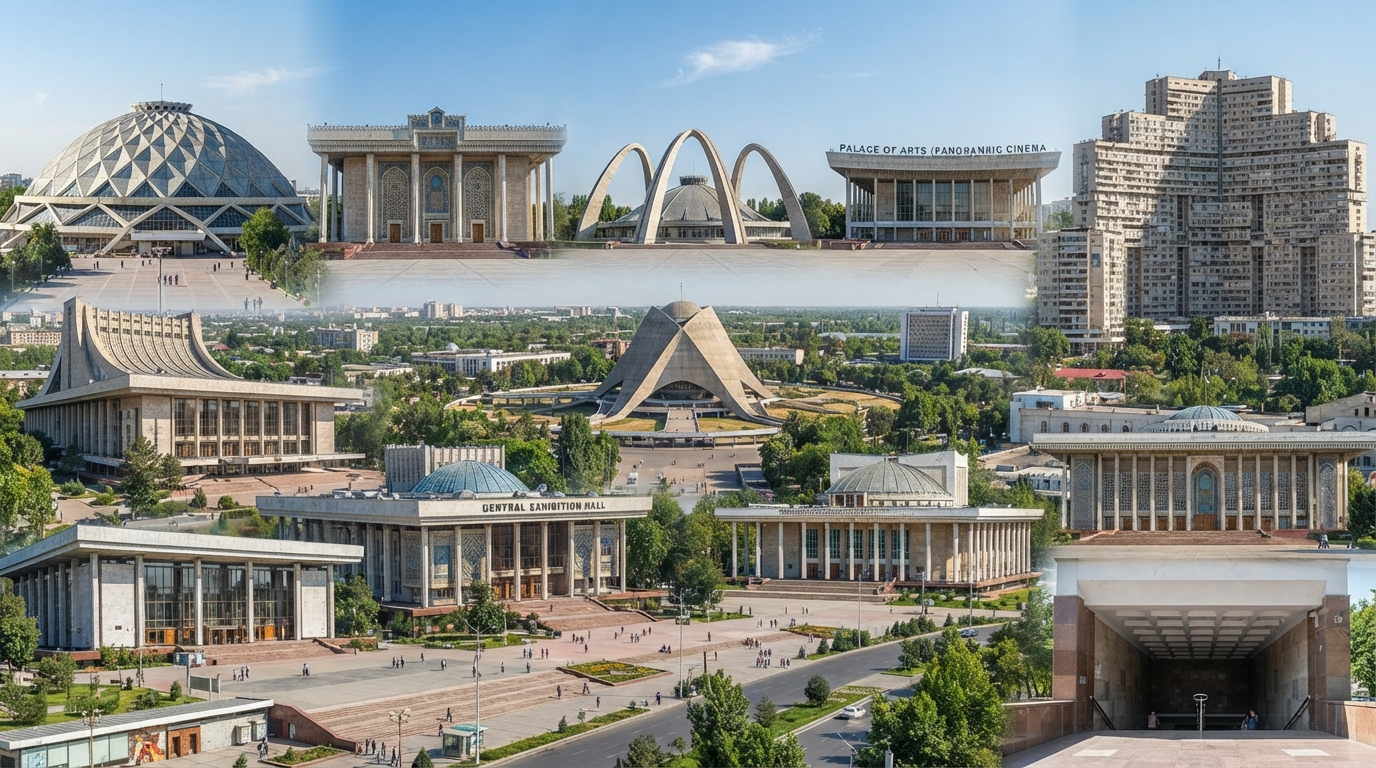
Ten examples of Tashkent's modernist architecture have been officially added to the UNESCO World Heritage List. This decision was made on Sunday during the 48th session of the UNESCO World Heritage Committee, which took place in Busan, Republic of Korea, from July 19 to 29. A delegation from the Uzbekistan Art and Culture Development Foundation and the National Commission of Uzbekistan for UNESCO attended the session.
Among 30 new nominations considered for inscription, the committee reviewed Uzbekistan’s submission, titled "Tashkent Modernist Architecture: Modernity and Tradition in Central Asia." This nomination features ten notable examples of late twentieth-century modernist architecture, encompassing various public, cultural, residential, and engineering structures.
The newly inscribed sites are:
* Pearl Residential Building (1975−1985)
* State Museum of the History of Uzbekistan (1968−1970)
* Peoples' Friendship Palace (late 1970s-1981)
* State Museum of Arts of Uzbekistan (1967−1974)
* Tashkent State Circus (1965−1975)
* Central Exhibition Hall of the Academy of Arts (1972−1974)
* Palace of Arts, Panoramic Cinema (formerly Alisher Navoi Cinema Palace) (1962−1964)
* Chorsu Market (Chorsu Bazaar) (1983−1990)
* Kosmonavtlar Metro Station (1982−1984)
* Sun Heliocomplex in Tashkent region (1981−1987)
All photographs were taken by Karel Balas and provided by the Uzbekistan Art and Culture Development Foundation.
Gayane Umerova, Chairperson of the Uzbekistan Art and Culture Development Foundation and head of the National Commission for UNESCO, commented, "The inscription of these sites on the World Heritage List restores an important chapter of Uzbekistan’s modern architectural history to the international context of 20th-century heritage and the global modernist movement." She added, "These buildings demonstrate how Tashkent used architecture to shape public life, collective identity and visions of the future. UNESCO recognition also carries a long-term responsibility — to preserve these buildings with the highest professional standards, ensure they remain an integral part of the city’s life and pass knowledge about them on to future generations."
Saida Mirziyoyeva, Head of the Presidential Administration, stated, "This recognition celebrates not only the value of individual buildings but an entire era, when a new image of Tashkent emerged after the earthquake, successfully combining modern architecture with the traditions of Central Asia and the characteristics of our climate. It is a major achievement for Uzbekistan and an important step toward preserving our architectural heritage for future generations."
Before this inscription, the UNESCO World Heritage List contained 1,248 sites across 170 countries. Uzbekistan previously had five cultural and two natural World Heritage sites. According to the Uzbekistan Art and Culture Development Foundation, this sixth inscription marks the country’s first national property to be added to the UNESCO World Heritage List in 25 years.
Uzbekistan has also become the first country in Central Asia and the CIS to have 20th-century modernist architecture recognized on the UNESCO World Heritage List. It joins a select group of just over ten countries globally whose modernist architectural heritage has received this prestigious international designation.
The UNESCO World Heritage Committee is the governing body of the 1972 Convention Concerning the Protection of the World Cultural and Natural Heritage. It serves as the primary international forum for addressing issues related to the protection of World Heritage sites, evaluating their conservation status, and deciding on new nominations submitted by states parties to the convention. In addition to the 30 new nominations, the committee is also reviewing proposals concerning three existing World Heritage sites and assessing the state of conservation of 147 listed properties.